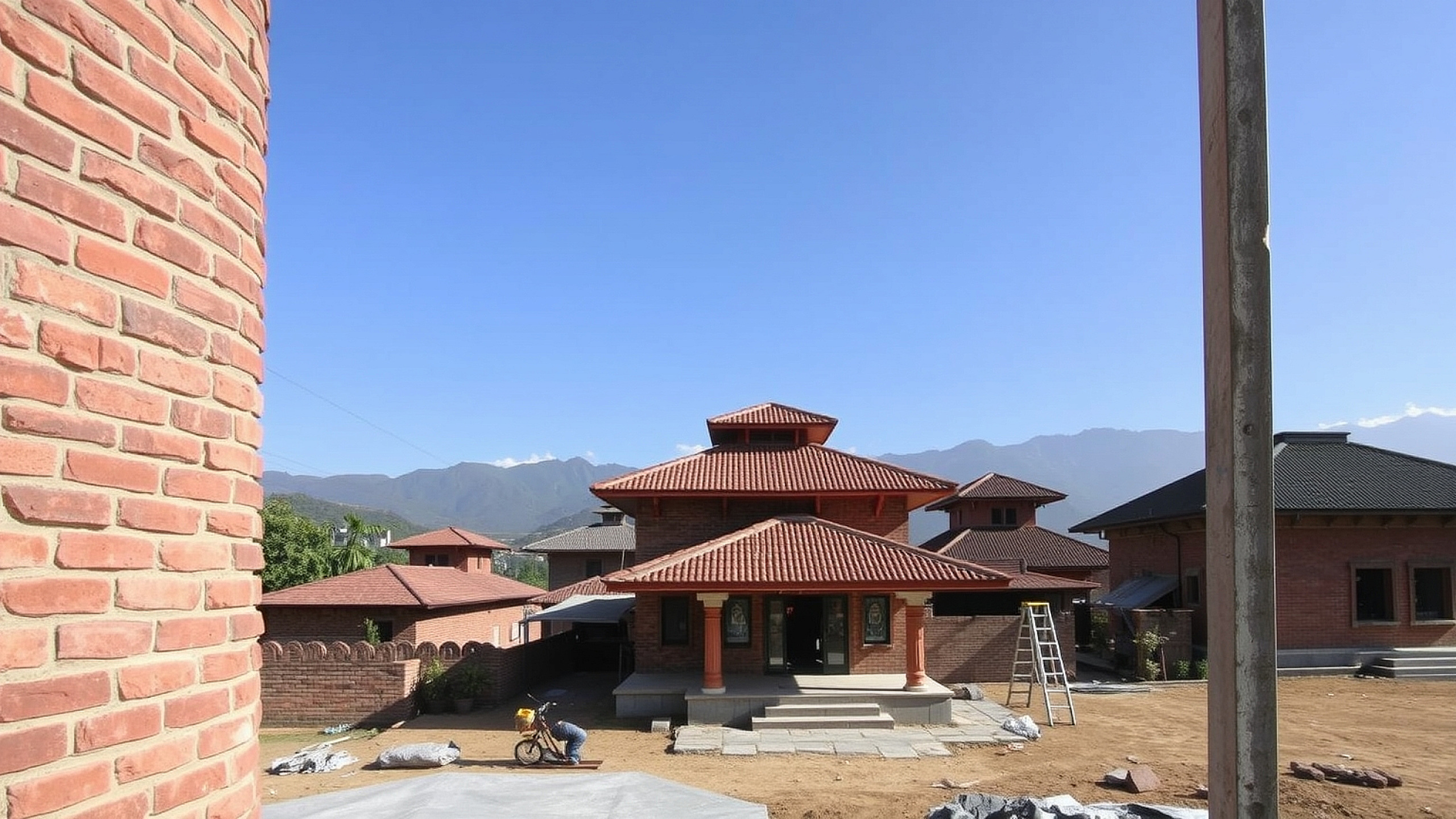
Beyond the Per-Square-Foot Myth
Most homeowners in Kathmandu or Pokhara start their construction journey by asking a single question: "What is the current rate per square foot?" While that gives you a ballpark figure, it often leads to a trap of cutting corners where it hurts most—structural integrity. The real secret to lowering your budget isn't buying cheaper cement or hiring unskilled labor; it is optimizing the two most expensive components of a Nepali house: the masonry walls and the RCC slabs.
Building a home in Nepal’s hilly or flat terrain requires a balance between seismic safety and financial reality. By making specific shifts in material selection and site management, you can save between NPR 3,00,000 to 7,00,000 on a standard two-and-a-half-story residential building without losing a wink of sleep over its safety.
The High Cost of Red Bricks: A Smarter Alternative
For decades, the red clay brick has been the default choice. However, the rising cost of coal and labor has pushed the price of a single 'A' grade brick to anywhere between NPR 17 and 23, depending on the transport distance from the kiln. When you factor in the mortar and the double-sided plastering required, the costs skyrocket.
- Consider AAC Blocks for Internal Walls: Autoclaved Aerated Concrete (AAC) blocks are significantly larger and lighter. Because they are 1/3rd the weight of red bricks, they reduce the 'dead load' on your pillars and beams.
- Save on Plaster: AAC blocks have a smooth finish. Instead of the traditional 12mm to 15mm thick cement-sand plaster, you can use a thin layer of gypsum or putty directly, saving both material and labor costs.
- Faster Execution: One AAC block replaces about 8-9 standard bricks, meaning your walls go up three times faster, cutting down daily wage expenses for masons.
Rethinking the Slab: Avoiding Concrete Wastage
The slab (dhalan) is where the most significant leakage of money occurs—literally and figuratively. In many Nepali construction sites, excess concrete is mixed, or slabs are made unnecessarily thick due to poor shuttering.
To optimize this, move away from traditional wooden plank shuttering. Renting steel plates or waterproof plywood shuttering provides a much smoother ceiling surface. This eliminates the need for a thick, expensive plaster layer on the ceiling; a simple 'puna' or thin coat of POP is often enough. This small change in site execution can save thousands in cement and sand alone.
Strategic Procurement: The 'Off-Season' Advantage
Construction materials in Nepal follow a seasonal price cycle. Prices for sand and aggregate often peak during the monsoon when river mining is restricted, or during the height of the dry season when demand is highest.
If you have enough space on your site, stock up on non-perishable items like reinforcement steel (sariya) during the months of Shrawan or Bhadra when construction slows down. However, never stock cement for more than 45 days, as it absorbs moisture from the air and loses its bonding strength.
Plumbing and Electrical Pre-Planning
One of the biggest hidden costs in Nepali homes is 'breaking and making.' We often see masons chipping away at newly built pillars or walls to fit pipes. This not only weakens the structure but wastes labor hours and materials.
- Use Sleeve Pipes: Ensure your structural engineer marks locations for plumbing sleeves within the beams before the concrete is poured.
- Looping Systems: Plan your electrical layout to use the shortest possible routes for wires. With copper prices rising in the local market, every meter of wire saved adds up.
The Importance of Professional Supervision
It sounds counterintuitive to spend money on an architect or engineer to save money, but an unsupervised site is a black hole for resources. A contractor might suggest adding more cement to a mix 'just to be safe,' which is scientifically unnecessary and expensive. A professional ensures the exact grade of concrete (like M20 or M25) is maintained, preventing the wastage of expensive bags of OPC cement.
At Vastuveda Designs, we emphasize that a cost-effective home is a well-planned home. By integrating Vastu principles with modern material engineering, you ensure that your investment is not just financially sound, but also brings peace and prosperity to your family.
Key Takeaway: Saving money in construction isn't about buying the cheapest materials; it’s about choosing materials that require less labor to install and less finish to look beautiful. Focus on AAC blocks, steel shuttering, and pre-planned utility conduits to see real savings.
If you are planning to build your dream home in Nepal and want a design that balances traditional wisdom with modern cost-efficiency, reach out to us at Vastuveda Designs for a consultation.