The Identity Crisis of Modern Nepali Homes
Walk through the streets of Bhaisepati or the developing hubs of Butwal, and you will notice a recurring problem. Most new houses look like identical concrete boxes painted in varying shades of beige or off-white. We often invest millions in the interior, yet the elevation design ideas for houses in Nepal usually stop at choosing a paint color. Your home’s facade is its first handshake with the world; it should tell a story of where you come from and where you are going.
In Nepal, we face a unique challenge: extreme monsoon rains that peel off cheap paint and a burning summer sun that fades bright colors within two seasons. A truly great exterior design isn't just about 'looking modern'—it is about choosing materials that age gracefully in our climate while reflecting a distinct Nepali identity. Let's explore how to move beyond the 'box' and create a facade that lasts.
The 'Industrial-Ethnic' Fusion: A New Direction
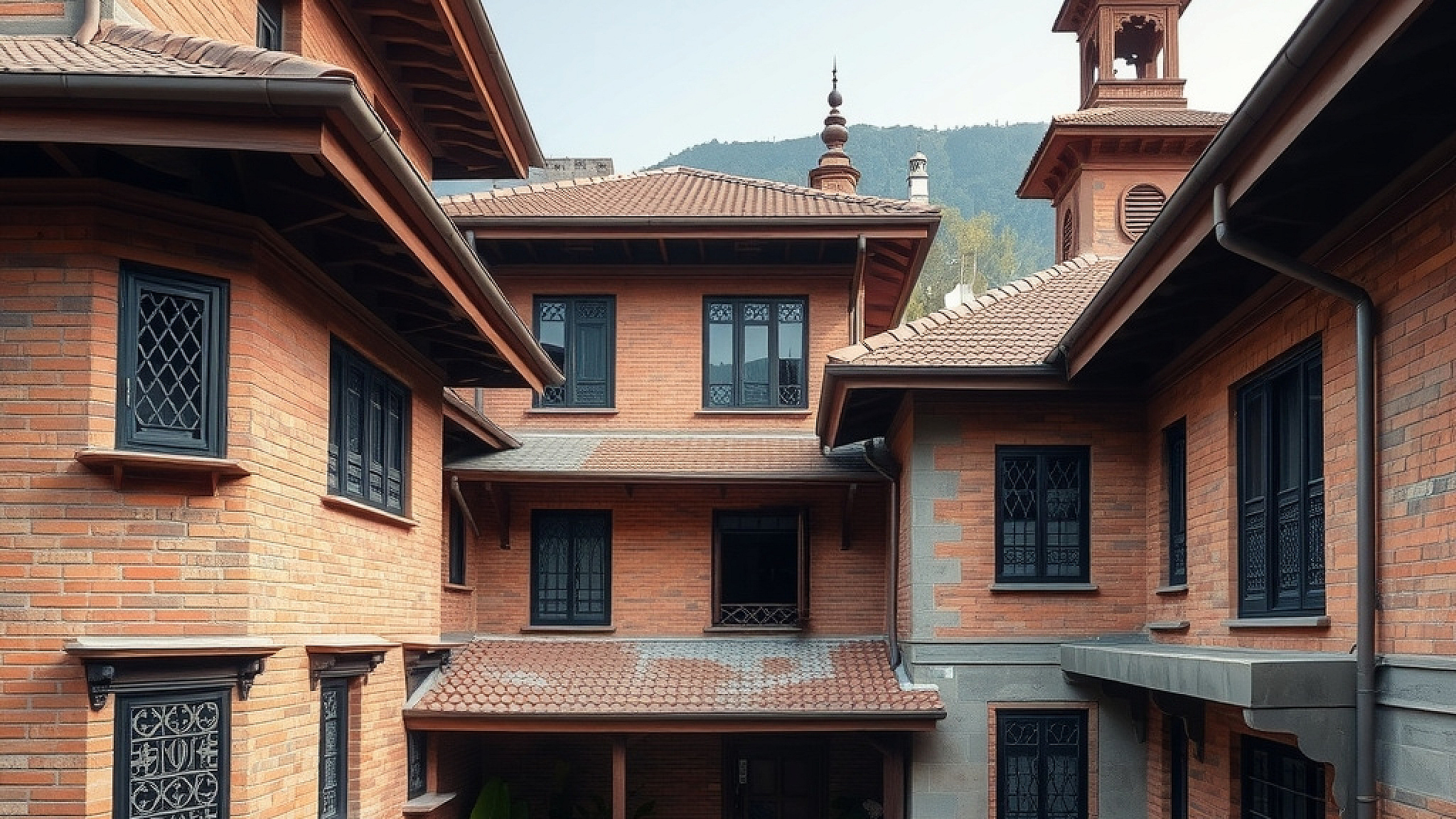
The most exciting trend in Nepali architecture right now is the fusion of raw, local textures with clean, industrial lines. Instead of covering your entire house in plaster and paint, consider a hybrid approach. This involves using 'honest' materials that don't need frequent maintenance and provide excellent thermal insulation.
- Exposed Hetauda Machine-Made Bricks: These offer a deep terracotta red that reminds us of Bhaktapur but with a precision that fits modern lines.
- Black Powder-Coated Steel: Used for balcony railings or vertical louvers to create sharp contrast against the red brick.
- External Wood-Polymer Composites (WPC): Since high-quality teak is expensive and high-maintenance, WPC louvers give you the warmth of wood without the rotting issues caused by Nepal’s heavy rains.
Maximizing the 'Chhen' Aesthetic in Urban Plots
In narrow Kathmandu plots (typically 3 to 5 aana), you don't have the luxury of wide setbacks. To make a small facade look grand, use verticality to your advantage. A vertical element, like a continuous stone cladding strip running from the ground floor to the terrace, can make a 2.5-story house appear taller and more imposing. Avoid horizontal bands that 'cut' the height of the building.
Practical Material Selection for the Nepali Climate
When selecting materials for your elevation design ideas for houses in Nepal, cost-effectiveness must meet durability. Here is a breakdown of what actually works in our environment:
- Shera Board Siding: If you love the look of wood but fear the NPR 8,000+ per sq. ft. price tag of genuine timber, Shera boards (cement fiber) are a savior. They are fire-resistant, water-resistant, and can be painted in wood-grain finishes.
- Local Slate and Stone: Sourcing slate from Nuwakot or stone from Pokhara for the ground floor skirting protects your walls from dampness (damp-proof course issues) during the monsoon.
- Double-Glazed Windows (uPVC): Beyond aesthetics, the massive glass panels popular in modern designs can turn your house into an oven. Use double-glazing to keep the heat out and reduce the noise from Kathmandu’s traffic.
The Power of Lighting: The 'Night Facade'
Most Nepali homeowners forget that their house exists after 6:00 PM. A well-designed facade needs a lighting plan. Instead of a single bright floodlight that flattens all architectural details, use 'Warm White' (3000K) up-lighters to highlight the texture of your brickwork or stone cladding. Recessed ceiling lights in the balcony soffits provide a soft glow that makes the house feel welcoming without being blinding.
Budgeting for a Premium Facade in Nepal
How much should you set aside? For a standard 1200-1500 sq. ft. footprint, a 'designer' facade using premium materials like ACP (Aluminum Composite Panels), stone cladding, and glass railings will typically add an extra 15% to 25% to your grey-structure cost. In current market rates, expect to spend anywhere from NPR 5,00,000 to NPR 15,00,000 specifically on exterior elevation enhancements, depending on the complexity and materials used.
Vastu Shastra and the Modern Facade
A beautiful house should also be a peaceful one. Even in modern designs, the placement of large glass openings should ideally be in the North or East to capture the morning sun. Avoid placing heavy stone cladding or dark colors excessively on the North-East corner; keep that area light and open to allow positive energy flow, as per traditional Vastu principles.
Final Takeaway for Nepali Homeowners
The best elevation design ideas for houses in Nepal are those that respect the local environment while embracing modern technology. Don't be afraid to leave some walls as raw brick or concrete. The contrast between the 'rough' and the 'smooth' (like glass and steel) is what creates architectural depth. Your house shouldn't just be another building on the block; it should be a landmark.
Building your dream home is a once-in-a-lifetime journey. If you are looking to balance modern aesthetics with the wisdom of Vastu Shastra, let’s chat. At Vastuveda Designs, we help you create spaces that look stunning and feel like home. Reach out for a consultation to see how we can transform your site into a masterpiece.