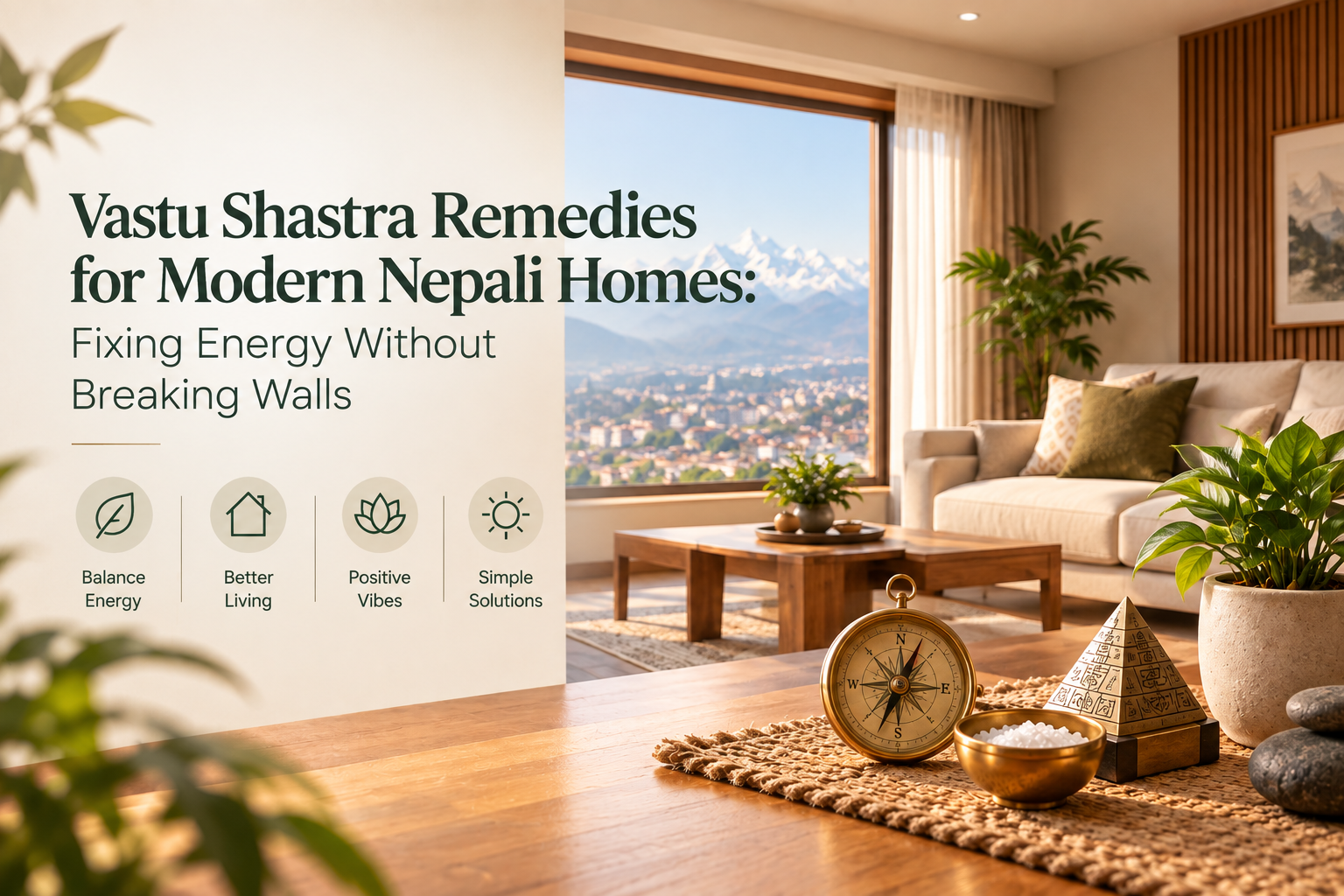
Beyond Demolition: Practical Vastu Shastra for Your Home
You’ve likely heard the stories: a family moves into a beautiful new house in Kathmandu or Pokhara, only to face unexpected health issues, financial stress, or constant bickering. Often, a traditional consultant visits and suggests the most terrifying solution—tearing down a wall or relocating the entire kitchen. In the context of modern Nepali RCC frame construction, breaking a pillar or a load-bearing wall isn't just expensive; it’s structurally dangerous.
Vastu Shastra is the ancient science of aligning your living space with the five elements—Earth, Water, Fire, Air, and Space. When these are out of balance, the energy of the home feels heavy. However, you don’t always need a sledgehammer to fix these imbalances. Most Vastu defects in typical 2.5-anna or 3-anna Nepali plots can be corrected using simple, free, or low-cost adjustments involving light, color, and elemental placements.
The North-East (Ishan Kona) Defect: Healing the Sacred Zone
In Vastu, the North-East is the most sacred corner, ruled by the water element and spiritual energy. In many Kathmandu homes where space is tight, we often see toilets or heavy staircases built in this corner. This is a major Vastu defect traditionally linked to blocked growth and mental stress. If your toilet is already fixed here, you cannot simply move the plumbing overnight.
The Remedy: To balance this, keep the North-East zone as light and clean as possible. Place a clear glass bowl filled with sea salt in the North-East corner of the bathroom; this is believed to absorb negative vibrations. Ensure the North-East window remains unobstructed to let in morning sunlight. Adding a small indoor plant or a picture of a calm water body can also help reintroduce the water element's positive flow.
Correcting Kitchen Vastu Without Relocating the Chulha
The kitchen represents the fire element (Agni). Ideally, it should be in the South-East. However, many modern apartments or houses in Nepal end up with kitchens in the North or North-East. This clash between the fire of the stove and the water energy of the North can lead to domestic friction and health concerns for the lady of the house.
The Remedy: If your stove is in a non-Vastu compliant zone, you can use color therapy to mitigate the effect. Placing a small piece of green marble or a green mat under the gas stove helps bridge the elemental gap. Since the fire element is weak in the North, ensure you use warm lighting in the kitchen. Avoid blue or black granite countertops in a South-East kitchen, as these colors represent water and can 'extinguish' the prosperity energy of the fire zone.
The Main Door: Redirecting Energy at the Threshold
Your main entrance, or Brahma Dwara, is the primary entry point for prana (life force). In Nepal, many houses face South or South-West due to the shape of the land or road access. While South-facing homes aren't inherently 'bad,' an incorrectly placed door on the South wall can feel draining. If your door is in the central South (the zone of Yama), it may lead to instability.
The Remedy: A well-lit entrance is the best free remedy. Install a bright light that stays on during the evening hours. Placing a 'Dehuri' (threshold) made of wood—ideally Sal or Teak—helps 'filter' the energy entering the home. You can also fix a copper or brass strip on the floor across the threshold to act as an energy barrier. Most importantly, keep the area behind the door clear; a door that cannot open a full 90 degrees represents limited opportunities.
Bedroom Balance: Enhancing Sleep Quality
The South-West is the zone of Earth and stability, making it the best spot for the Master Bedroom. If your bedroom is in the North-West (the zone of Air/Movement), you might find yourself feeling restless or facing frequent travel and instability. For many families in rented Kathmandu flats, choosing the room isn't always an option.
The Remedy: The direction of your head while sleeping is more important than the room itself. Ensure your head points South or East. To bring 'Earth' stability to a North-West room, use heavy furniture or thick curtains in earthy tones like ochre, yellow, or beige. Avoid keeping mirrors directly opposite the bed, as this is said to disturb the aura during sleep. If a mirror is fixed there, simply cover it with a cloth at night.
Managing the 'Brahmasthan' in Compact Plots
The center of the house is called the Brahmasthan. In traditional Nepali courtyards (Chowks), this was always open to the sky. In modern pillar-system houses, we often see a heavy pillar or a dining table placed exactly in the center. A 'heavy' center can lead to a feeling of stagnation for the head of the household.
The Remedy: While you cannot move a pillar, you can ensure the center of the house is the most well-lit area. Use a bright ceiling light or a crystal chandelier to lift the energy. If the center is an open area, keep it clutter-free. Never place a dustbin or a heavy storage trunk in the geometric center of your floor plan.
Actionable Checklist for a Vastu-Friendly Home
- Salt Cleansing: Once a week, mop your floors with water mixed with a handful of sea salt (except on Thursdays) to clear stagnant energy.
- Clutter Removal: Clear out the space under your beds and the top of your wardrobes. Clutter in these areas represents 'mental weight.'
- Door Sound: Oil your hinges. A squeaky door is considered a 'shabd-dosha' (sound defect) that attracts friction.
- Auspicious Symbols: Place a simple Om or Swastika symbol made of brass or wood at the entrance to invite positive vibrations.
Vastu Shastra is not about fear; it is about harmony. By making these small, intentional changes, you can significantly shift the feel of your home without spending lakhs on renovations. The goal is to create a space that supports your health, career, and family peace within the unique constraints of Nepali urban living.
If you are planning to build a new home or are facing persistent issues in your current space, a professional assessment can provide clarity. At Vastuveda Designs, we combine traditional wisdom with modern architectural engineering to ensure your home is both beautiful and energetically balanced.