The High Price of Rigid Thinking in Nepali Construction
Walk through any neighborhood in Kathmandu, Pokhara, or Butwal, and you will see a similar sight: concrete frames rising rapidly. But here is a question most homeowners forget to ask until the ground actually shakes: Is my house built to be rigid, or is it built to be resilient? In Nepal’s seismic reality, being 'strong' is not enough. If a material is too stiff, it snaps. If it is too heavy, it attracts more seismic force. To build a home that lasts generations, you must choose building materials suited to Nepal’s climate and earthquake zones with a focus on ductility and thermal mass.
Construction in Nepal often suffers from a 'one-size-fits-all' approach. We use the same heavy bricks and thick concrete slabs in the freezing winters of Solukhumbu as we do in the sweltering 40-degree heat of Nepalgunj. This oversight doesn't just impact your comfort; it impacts the structural integrity of your home during an earthquake. Here is how to navigate the market to find materials that actually work for our unique landscape.
The Steel Paradox: Fe 500 vs. Fe 500D
Most Nepali homeowners walk into a hardware store and ask for 'Grade 500' steel. However, the 'D' in Fe 500D is the most critical letter for your safety. In earthquake zones like the Kathmandu Valley, you need ductility—the ability of the steel to deform and bend without breaking. While standard Fe 500 is strong, Fe 500D has a higher percentage of elongation.
- Check the Stamp: Always ensure the rebar has the 'D' marking. It typically costs only NPR 2-5 more per kilogram but can be the difference between a standing home and a collapse.
- Storage Matters: On Nepali sites, rebar is often left in the rain, leading to corrosion. Rusted steel loses its bonding strength with concrete. Ensure your site supervisor keeps steel elevated on wooden blocks and covered with plastic.
Rethinking Bricks: Red Clay vs. AAC Blocks
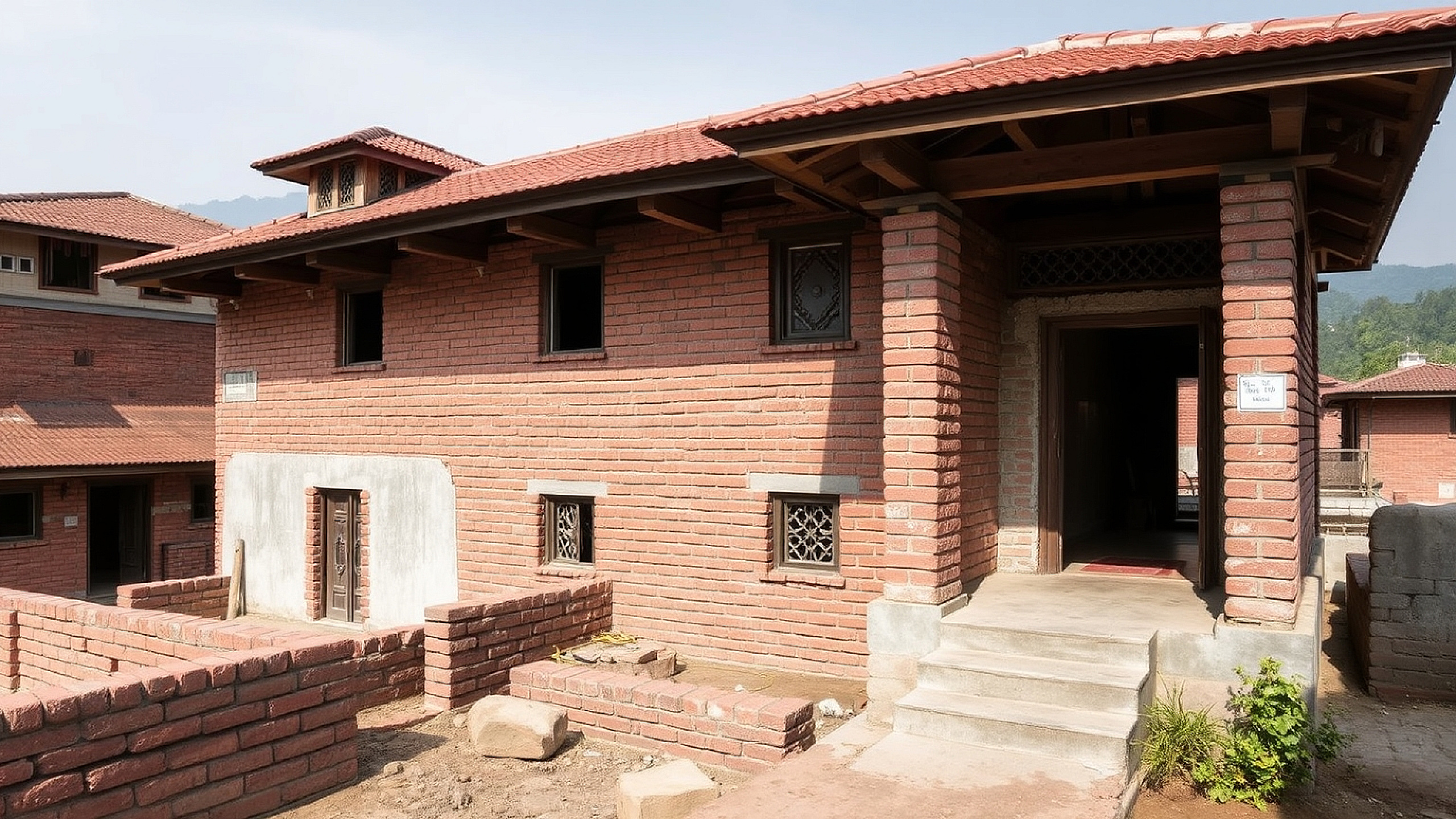
The traditional red brick is a staple in Nepali architecture, but it has two major flaws: it is incredibly heavy and a poor insulator. In a seismic event, the weight of your walls contributes to the 'inertia' that pulls your house down. This is where choosing building materials suited to Nepal’s climate and earthquake zones becomes a game of physics.
Autoclaved Aerated Concrete (AAC) blocks are gaining popularity in urban centers like Lalitpur and Chitwan. They are nearly one-third the weight of traditional bricks, significantly reducing the total 'dead load' of your building. From a climate perspective, AAC blocks have superior thermal insulation. In the heat of the Terai, they keep interiors cooler, and in the Kathmandu winter, they retain heat far better than standard 9-inch brick walls.
Cement Grades and the 28-Day Myth
In Nepal, we often obsess over the brand of cement rather than the grade. For residential R.C.C. (Reinforced Cement Concrete) frames, OPC (Ordinary Portland Cement) 43 or 53 grade is standard. However, many site workers add too much water to make the mix 'workable,' which kills the strength of the cement.
- The Water-Cement Ratio: Every extra liter of water added to a bag of cement reduces its ultimate strength. Use plasticizers if you need workability without compromising the structural integrity.
- Curing Discipline: Nepal’s dry winds, especially in February and March, can evaporate moisture from new concrete too quickly. Proper curing for at least 14 days is non-negotiable for achieving seismic design strength.
Addressing the Terai-Hills Climate Divide
A house in Dharan needs to breathe differently than a house in Dhulikhel. When choosing building materials suited to Nepal’s climate and earthquake zones, consider your local humidity. In the Terai, moisture rising from the ground (capillary action) is a major cause of dampness and paint peeling. Investing in high-quality bitumen-based DPC (Damp Proof Course) and water-proofing compounds during the foundation phase will save you lakhs in maintenance costs later.
For those in the hilly regions, stone masonry with 'through-stones' and concrete 'gabion' techniques can be more sustainable and earthquake-resistant than poorly executed RCC frames. The key is to ensure that the heavy mass of the stone is tied together with horizontal 'bands' at the plinth, sill, and lintel levels.
Key Takeaways for the Nepali Homeowner
Building a home is likely the largest investment you will ever make. To ensure it protects your family, prioritize these three things: use Fe 500D ductile rebar, consider lightweight wall materials like AAC to reduce seismic load, and never compromise on the water-cement ratio during site execution. At Vastuveda Designs, we specialize in blending these modern engineering necessities with the timeless principles of Vastu Shastra to create homes that are as safe as they are soulful. If you are planning your build and want a structure optimized for Nepal’s unique geography, feel free to reach out for a consultation.