The 'Agnishala' Dilemma in Urban Nepal
You’ve just moved into a beautiful new apartment in Sanepa or a standalone house in the outskirts of Pokhara. The view is majestic, but something feels off. Perhaps the family is frequently falling ill, or despite a good income, your savings seem to evaporate like mist over the Bagmati. In our experience at Vastuveda Designs, these issues often stem from a fundamental clash between modern floor plans and the ancient science of directions.
Vastu Shastra isn't about superstition; it is the architectural science of balancing the five elements—Earth, Water, Fire, Air, and Space. In the cramped plots of Kathmandu or Butwal, we often sacrifice the 'Agni' (Fire) corner for a bathroom or push the main entrance into a 'negative' zone. Let’s look at how to identify these specific Vastu problems and fix them using local materials and practical wisdom.
The Southeast Kitchen: When Fire is Misplaced
The Southeast (Agneya Kon) is the natural home for the kitchen because it is governed by the Sun and the Fire element. However, with modern pillar-system construction in Nepal, many kitchens are being pushed to the Northeast (the Water zone) or the Southwest (the Earth zone). This creates a direct elemental conflict.
If your kitchen is in the Northeast, you are effectively 'drowning' your fire. This often manifests as chronic digestive issues for the lady of the house or constant bickering among family members. You cannot easily move a concrete slab or plumbing, but you can apply these Vastu fixes:
- The Color Shield: If your kitchen is in the North or Northeast, avoid using red granite or tiles. Instead, use shades of yellow or lemon green to bridge the elemental gap.
- The Agni Correction: Place a small Agni Crystal or a copper sun on the Southeast wall of your misplaced kitchen to symbolically invite the fire element back.
- The Sink-Stove Divide: Ensure your sink (Water) and stove (Fire) are at least 3 feet apart. In tight Kathmandu kitchens, if they are adjacent, place a small wooden partition or a row of green plants between them.
The Main Entrance: The Mouth of Your Home
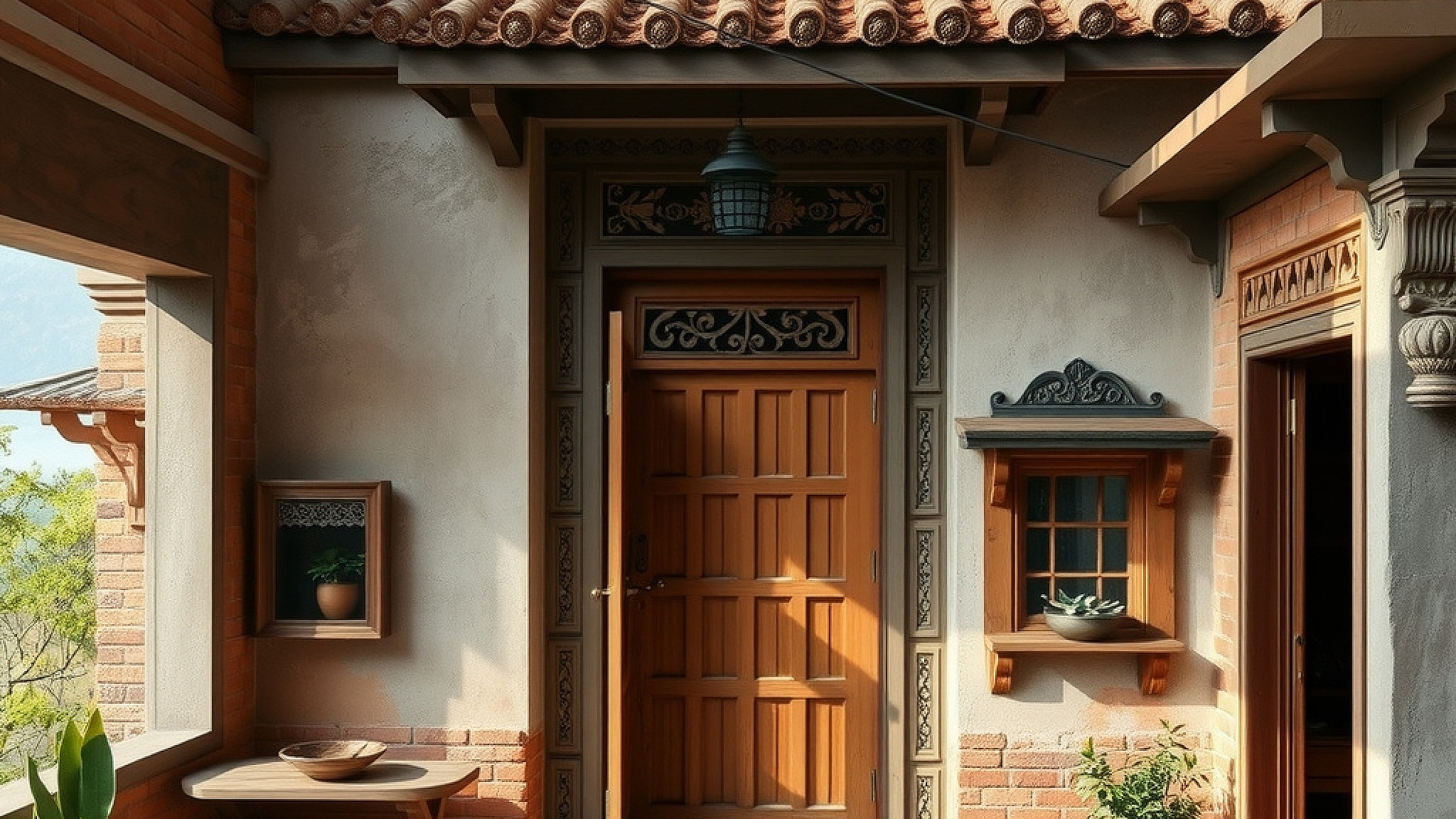
The main door is where the 'Prana' or life force enters. A common mistake in Nepali homes is placing the entrance in the South-West (Nairitya). This is the zone of the 'Rahu' and is meant for stability and heaviness, not for an opening. A South-West entrance often leads to unexpected financial drains and a feeling of restlessness.
If your main door is already built in a sub-optimal direction, you don't need to demolish the wall. Try these specific remedies:
- Lead Metal Helix: For a South-West door, embedding a lead metal wire or helix under the threshold can help neutralize the negative energy. This is a common practice in Vedic architecture to 'seal' a leak.
- The Threshold Power: In traditional Newari architecture, the 'Pali' or raised threshold is crucial. Ensure your main door has a slightly raised threshold (about 1-2 inches) made of wood or marble. This prevents energy from flowing straight out.
- Illumination: Ensure the entrance is the brightest part of the house. Use warm yellow lights (LEDs in the 3000K range) rather than harsh white lights to welcome positive energy.
Bedroom Vastu: Ensuring Rest in a Busy City
In a city that never truly sleeps, like Kathmandu, your bedroom should be your sanctuary. The biggest mistake we see is the headboard facing North. Scientifically, the human body has its own magnetic field, and the Earth's magnetic North poles repel the iron in our blood if we sleep with our heads to the North, leading to disturbed sleep and high blood pressure.
Fixing your bedroom Vastu is often the easiest as it involves furniture movement rather than masonry:
- The South-Head Rule: Always align your bed so your head points South or East. This aligns your body's magnetic field with the Earth's, ensuring deep, restorative sleep.
- Mirror Placement: Never place a mirror directly opposite the bed. In Vastu Shastra, seeing your reflection while sleeping is said to cause health issues. If you have a fixed wardrobe mirror, simply cover it with a curtain at night.
- The Heavy Corner: Keep the Southwest corner of your bedroom heavy with wardrobes or cupboards. This provides the 'Earth' stability required for a peaceful life.
Practical Costs and Materials in Nepal
Correcting Vastu doesn't have to cost lakhs of NPR. Most symbolic fixes like copper wires, pyramids, or specific stones can be found in markets like Asan or through specialized consultants for under 5,000 to 15,000 NPR. The real value lies in the placement, not the price tag of the remedy.
The key takeaway is that Vastu Shastra is a flexible science. While an ideal layout is best, 'Vastu Dosha' can almost always be mitigated through elemental balancing. Your home should support your ambitions, not drain your energy. If you are planning a new build or feeling stuck in your current space, a professional Vastu audit can provide the clarity you need to transform your living environment into a powerhouse of positivity. Feel free to reach out to Vastuveda Designs for a personalized consultation tailored to your specific plot and lifestyle.