The Challenge of the Narrow Facade
Walk through any residential colony in Kathmandu, Pokhara, or Butwal, and you will see a common sight: rows of houses built on 2.5 to 4 anna plots. These narrow, vertical structures often end up looking like generic concrete boxes because homeowners feel limited by the small width of their property. However, a narrow plot doesn't have to mean a boring exterior.
Modern elevation design ideas for houses in Nepal are shifting away from heavy, over-decorated pillars toward clean lines, functional textures, and climate-responsive materials. Whether you are building in the humid Terai or the sun-soaked hills, your house's facade is its first handshake with the world. Here is how you can make it count without breaking your budget.
1. Use Vertical Elements to Create the Illusion of Width
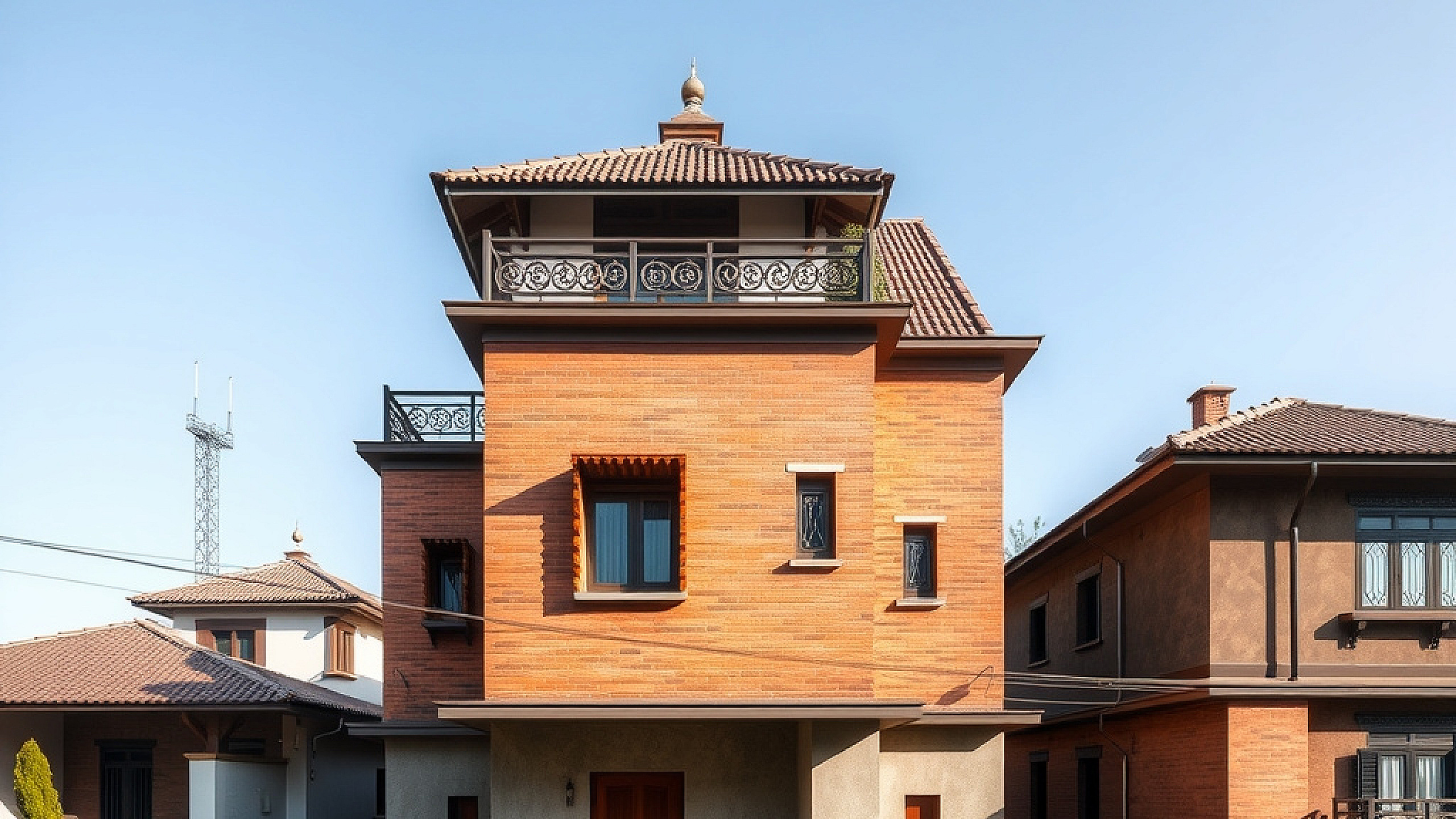
When you have a narrow frontage, typically between 15 to 25 feet, the goal is to break the vertical monotony. Strategic architectural design can make a small house look more expansive and balanced. Instead of one flat surface, we recommend creating 'planes' of different depths.
- Cantilevered Balconies: Extending a balcony slightly beyond the main wall adds a shadow line that creates depth.
- Vertical Louvers: Using aluminum or wood-finish louvers on one side of the facade draws the eye upward and provides privacy for staircases.
- Color Blocking: Use a darker shade like charcoal grey or terracotta on recessed parts of the wall and white or cream on protruding sections.
2. Integrating CNC Jali and Metal Screens
In many Nepali neighborhoods, houses are built very close to each other. This creates a privacy issue. CNC-cut metal or ACP (Aluminum Composite Panel) jali screens are a brilliant solution for elevation design. They allow sunlight and air to filter through while blocking a direct line of sight from the street.
A CNC jali panel costs roughly NPR 450 to 800 per square foot depending on the material and thickness. Placing a backlit jali screen over a window or a service duct not only hides ugly plumbing but acts as a glowing piece of art at night. This is particularly effective for West-facing homes in the Terai, where screens help cut down the harsh afternoon heat.
3. The Power of Natural Stone Cladding
Nepal has a rich tradition of using stone, from the slate roofs of the hills to the brickwork of Newari architecture. For a modern elevation, we often suggest using natural stone cladding to add organic texture. Hetauda stone, slate, or sandstone strips can be used on a single 'feature wall' of the exterior.
Avoid cladding the entire house in stone, as it becomes visually heavy and expensive. A single vertical strip of stone cladding, costing between NPR 180 to 350 per square foot for labor and material, can elevate a standard cement-finish house to a premium-looking residence. Pair this with a glass railing on the balcony for a contemporary contrast.
4. Climate-Smart Windows and Lighting
Your window choice is a major component of your elevation. In Kathmandu, where winter sunlight is precious, larger South-facing windows are a must. For a modern look, shift from traditional MS grills to sleek aluminum-frame windows. If security is a concern, internal horizontal bars provide safety without ruining the exterior aesthetic.
Exterior lighting is the final touch. Most Nepali homeowners forget to budget for 'facade lighting' until the house is finished. Pointed spotlights (up-lighters) placed at the base of a textured wall or warm LED strips under balcony edges can make a standard house look like a luxury villa after sunset.
5. Budgeting for Your Elevation in 2026
While the internal structure remains the same, the 'skin' of your house can vary in price. Based on current market trends in Nepal, here is what to expect for exterior finishing:
- Standard Finish: Quality weather-coat paint and basic tile work (NPR 4,200 – 4,500 per built-up sq.ft).
- Premium Finish: Stone cladding, ACP panels, and glass railings (NPR 5,200 – 5,600 per built-up sq.ft).
- Luxury Finish: Large-format porcelain slabs, HPL (High-Pressure Laminate) wood panels, and smart lighting (NPR 7,000+ per built-up sq.ft).
Summary of Key Takeaways
Designing a beautiful house in Nepal is about balancing the constraints of small plots with the opportunities of our climate. Focus on one or two materials—like stone and glass—rather than mixing five different textures. Use depth and shadows to make a narrow house feel grand. Most importantly, ensure your main entrance remains clear and welcoming, following Vastu principles to ensure a harmonious flow of energy into your new home.
If you are planning your dream home and want an elevation that stands out in your neighborhood, our team at Vastuveda Designs is here to help. We combine traditional Vastu wisdom with modern architectural aesthetics to create homes that are as beautiful as they are peaceful.