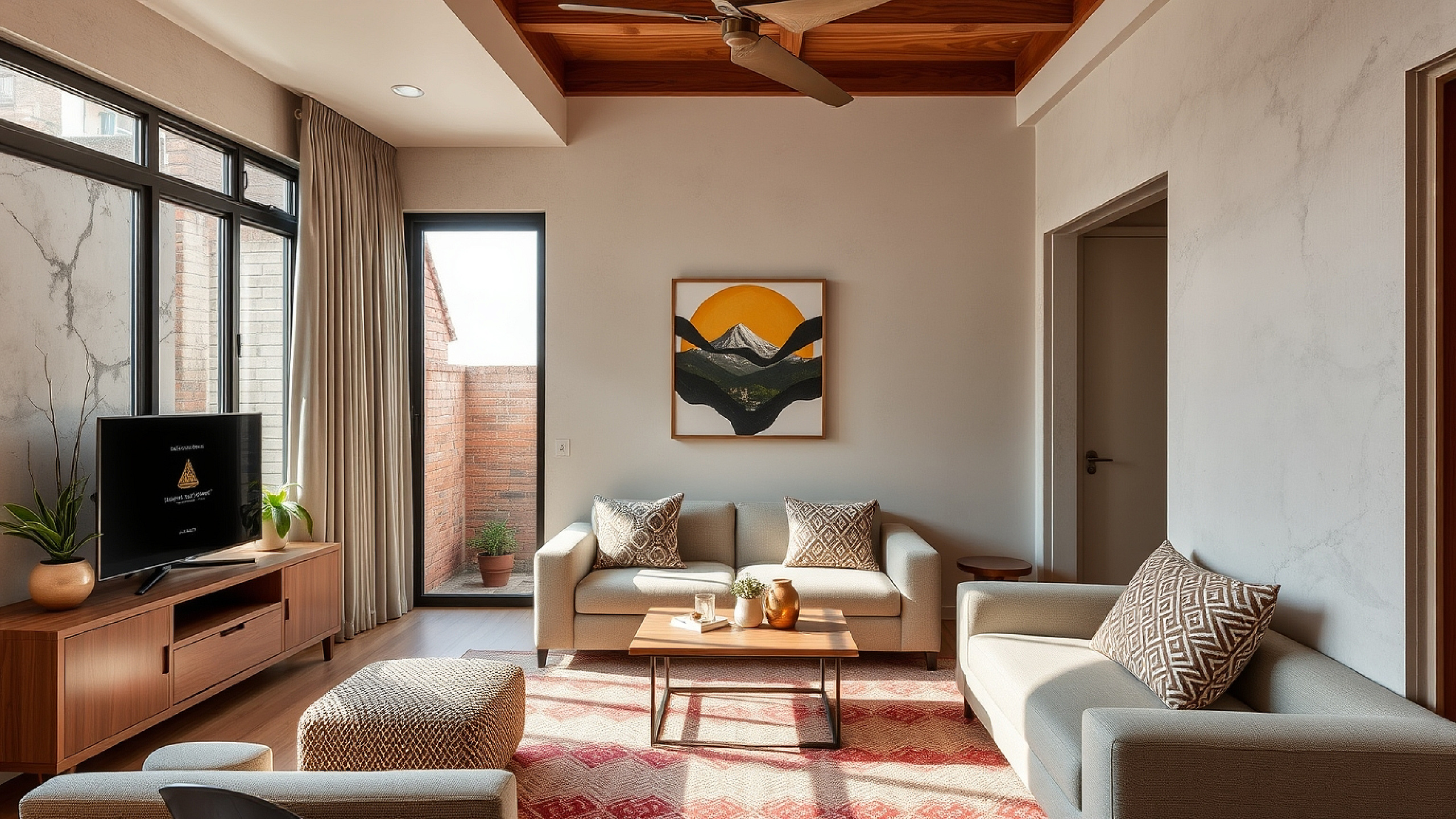
The 4-Anna Challenge: Turning Constraints into Character
Walk through the narrow gallis of Baneshwor or the rising colonies of Lalitpur, and you will notice a common theme: the struggle to fit a dream lifestyle onto a 4-anna plot. Most homeowners in Kathmandu feel the same pinch—the rooms feel tight, the hallways are dark, and every corner is cluttered with extra cylinders, winter quilts, and water jars. We often focus so much on the exterior concrete that we forget that interior design ideas for a modern Nepali house should actually solve these daily frustrations.
Designing for a modern Nepali home isn't just about picking a trendy paint color from a catalog. It is about understanding how a family of five lives in a vertical space, how to manage the dust of the ring road, and how to capture that precious south-facing sunlight during a chilly January morning. Let’s look at how we can rethink your layout, lighting, and storage to make a small footprint feel like a sprawling sanctuary.
Open Layouts with a Nepali Twist
The traditional approach in Nepal has been to divide every room with a solid 9-inch brick wall. This creates a series of dark boxes. In a modern layout, we advocate for the 'Social Heart'—a combined living, dining, and kitchen area. However, we know that Nepali cooking often involves high heat and spices that can linger. Instead of a fully open kitchen, consider using tempered glass partitions with slim black aluminum frames. This keeps the visual flow open but keeps the smell of a heavy curry away from your sofa.
- Eliminate Dead Hallways: Use the area under the staircase (typically 30-40 sq. ft.) as a built-in workstation or a puja unit rather than leaving it as a dumping ground.
- Sunken Living Rooms: Creating a slight level change (about 6 inches) defines the lounge area without needing a wall, making the ceiling feel higher.
- The Multi-Purpose Guest Room: Since guests come occasionally, use Murphy beds or sofa-cum-beds in the ground floor room to keep it functional as a home office or kid's play area during the week.
Harnessing Light in Dense Neighborhoods
In tightly packed areas like Koteshwor or Imadol, your neighbors might be just five feet away, blocking your side windows. Relying on standard windows often leads to privacy issues or permanent darkness. To bring life into your modern Nepali house, you must think vertically. Skylights or glass roof tiles above the stairwell can flood the center of the house with natural light, reducing your electricity bill during the day.
For the interiors, avoid the heavy, dark wood paneling that was popular in the 90s. While we love our Sal wood, using it everywhere makes a small room feel suffocating. Use light oak finishes or white-washed ash wood paired with 'off-white' or 'eggshell' walls. These colors reflect the limited light available, making the space feel twice as large. Mirrors placed opposite a window can also double the perceived depth of a narrow dining room.
Smart Storage: Solving the 'Extra Cylinder' Problem
The biggest enemy of a beautiful Nepali interior is the lack of dedicated storage for bulky essentials. We often see beautiful living rooms ruined by a stray 20-liter water jar or piles of shoes by the main door. The secret to a clean aesthetic is integrated, floor-to-ceiling cabinetry. In Nepal, custom carpentry is still more cost-effective than importing modular units, allowing you to use every inch of your wall height.
- Hidden Shoe Cubbies: Build a bench in the entryway that stores 12-15 pairs of shoes inside. It keeps the 'dhoka' clean and provides a seat to put on boots.
- The Kitchen 'Larder': Dedicate one full-height cabinet for gas cylinders, large sacks of rice (bhari), and water jars. Use heavy-duty rollers so you can slide them out without breaking your back.
- Box Beds with Hydraulic Lifts: Essential for storing heavy winter blankets and suitcases that you only need twice a year.
Materials and Budgeting in the Local Context
When implementing these interior design ideas for a modern Nepali house, focus on durability. For flooring, while marble looks premium, high-quality SPC (Stone Plastic Composite) flooring is gaining popularity in Kathmandu because it’s warmer underfoot during winter and easier to maintain. Expect to spend anywhere from NPR 2,500 to NPR 4,500 per square foot for a complete high-end interior fit-out, including furniture, false ceilings, and lighting.
By prioritizing a smart layout over heavy decoration, you ensure that your home isn't just a place to stay, but a space that breathes. A well-designed home should feel like it was built specifically for your lifestyle, accommodating everything from a quiet morning tea to a loud Dashain gathering. At Vastuveda Designs, we specialize in balancing these modern spatial needs with the timeless principles of Vastu Shastra to ensure your home brings both comfort and prosperity.
Key Takeaway
Modern Nepali interiors thrive when they prioritize light-reflective colors, multi-functional furniture, and hidden storage for local household essentials. Stop building rooms; start designing experiences that maximize every square inch of your plot.
If you are planning to build or renovate and want a space that feels larger than its footprint, we invite you to discuss your vision with our team at Vastuveda Designs.