The Hidden Leak in Your Construction Budget
You’ve finalized your floor plan, received the structural drawing, and the municipal permit is in hand. But as you start talking to contractors in Kathmandu or Butwal, the numbers begin to swell. Many Nepali homeowners find themselves 20% over budget before the first floor is even cast. The problem isn't usually the big-ticket items like cement or steel—it's the 'invisible' waste in site execution and material choices that adds up to lakhs of NPR.
Building a home in Nepal’s varying climate requires more than just following a blueprint. It requires a strategic approach to materials and labor management. By focusing on three specific areas—wall optimization, slab management, and the timing of finishes—you can significantly reduce your home construction cost without ever touching the structural integrity of your building.
1. Rethink Your Brick Strategy: The 9-Inch Trap
In Nepal, we have a cultural habit of building every exterior wall 9 inches thick. While this offers a sense of security, it drastically increases your material and labor costs. For a standard RCC frame structure (pillar system), the walls are non-load bearing. They are simply infill panels.
- Use 4-inch walls strategically: For internal partitions, always stick to 4-inch (single brick) walls. This saves nearly 50% on brick volume and mortar compared to double-brick walls.
- Consider AAC Blocks in Urban Centers: In cities like Kathmandu or Pokhara, Autoclaved Aerated Concrete (AAC) blocks are becoming a cost-effective alternative. They are lighter, reducing the dead load on your pillars, and require much less cement mortar.
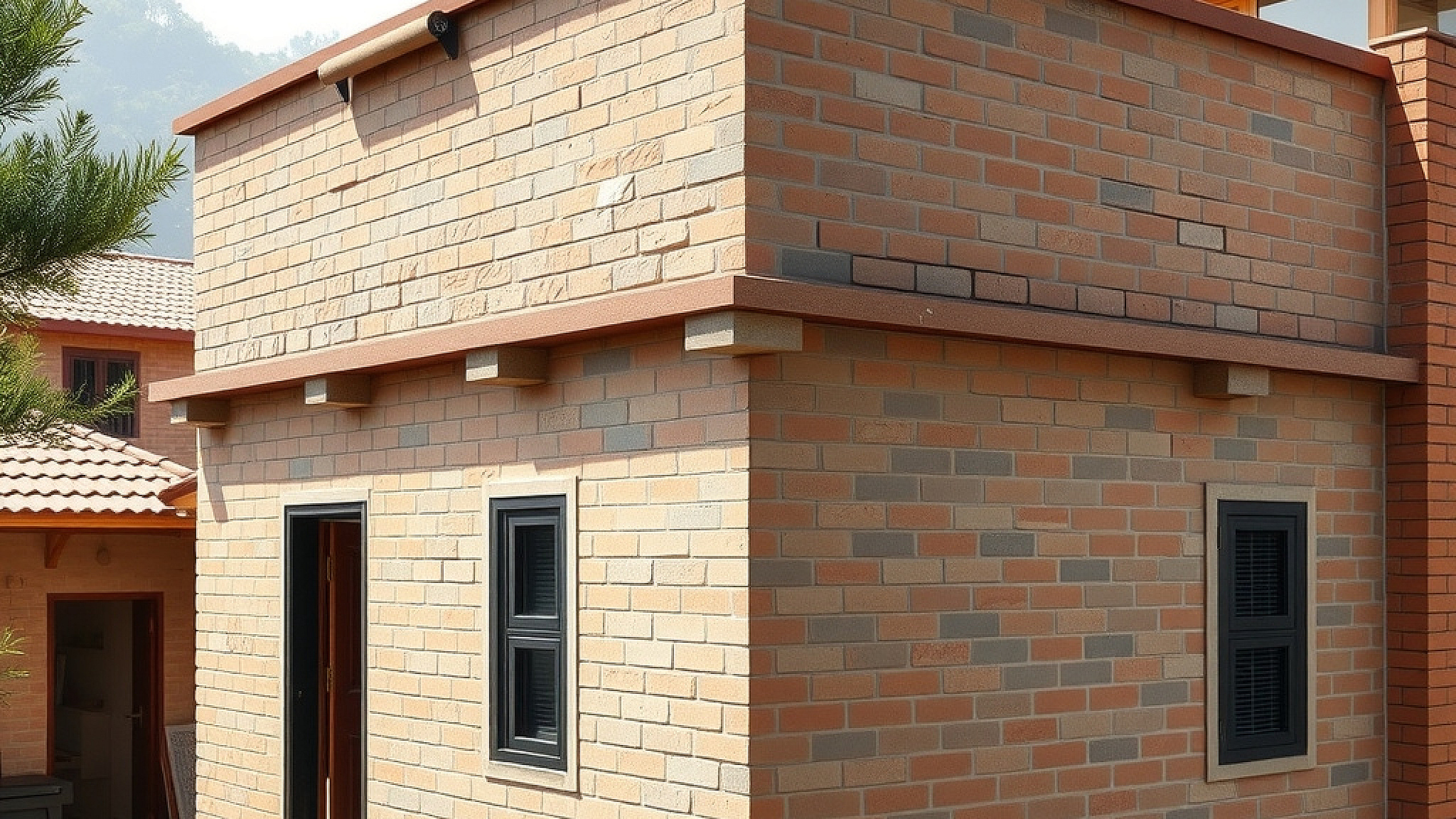
- Machine-made vs. Local Bricks: While local 'No. 1' bricks are cheaper upfront, their irregular shapes lead to thicker plastering layers. Using high-quality machine-made bricks often pays for itself by reducing the cement-sand mix needed for a smooth wall finish.
2. Slab Thickness and Centering Costs
The 'Dhalan' is the most expensive day on a Nepali construction site. Many owners insist on a 6-inch slab for a small residential house, thinking 'thicker is better.' However, for most residential spans, a 5-inch (125mm) slab is structurally sufficient and approved by engineers.
Reducing just one inch of thickness across a 1,000 sq. ft. floor saves roughly 83 cubic feet of concrete. At current rates for Nepal Ambuja or Jagadamba cement and local crushed stone, this simple change can save you over NPR 40,000 per floor in material alone. Additionally, ensure your contractor uses plywood shuttering instead of old wooden planks. Plywood gives a smoother ceiling finish, allowing you to skip the expensive 'Punni' or thick plastering and move directly to a thin coat of putty.
3. Smart Finishing: The 'Inside-Out' Approach
Finishing consumes nearly 40% of your total budget. A common mistake in Nepal is rushing into expensive exterior paints and claddings immediately after the structure is ready. The harsh monsoon and high UV levels in regions like the Terai can fade expensive exterior finishes within two seasons if applied prematurely.
- Grey-Scale Living: Consider moving in once the interior is fully functional but leave the exterior painting for a year. This allows the house to 'settle' and any structural hair-cracks to appear and be treated before the final paint goes on.
- Local Stones vs. Imported Marble: Instead of imported Indian marble or Italian tiles, look at Godawari marble or local slate for porch and staircase areas. They are more slip-resistant in our climate and significantly cheaper.
- Bulk Buying: Buy your bathroom fixtures (CP fittings) and tiles from a single wholesaler in areas like Teku or Nayabazar. Negotiating a package deal for three bathrooms can often net you a 15-20% discount compared to piece-meal buying.
4. Reducing Wastage on Site
Site execution is where most money is literally thrown away. In many Nepali sites, it is common to see 5% of steel rebars wasted because they weren't cut according to a 'Bar Bending Schedule.' Request your engineer to provide a BBS. This ensures that the 12-meter long steel rods are cut in a way that the leftovers (wastage) are minimal. Similarly, ensure that sand and aggregate are stored on a plastic sheet or a leveled surface to prevent them from mixing with mud, which renders the bottom 10% of the pile unusable.
The Power of Supervision
Perhaps the biggest cost-saving tip is regular professional supervision. A contractor might suggest adding extra cement to 'make it strong,' but excess cement can lead to shrinkage cracks. An architect or site engineer ensures you use exactly what is needed—no more, no less. This precision is the hallmark of a modern, cost-effective Nepali home.
Key Takeaway for Homeowners
Building a home is likely your biggest lifetime investment. You don't save money by buying 'cheap' materials; you save money by reducing wastage, choosing the right material for the right purpose, and planning the execution sequence. Focus on the structure first, optimize your wall thickness, and be patient with the luxury finishes.
At Vastuveda Designs, we specialize in balancing traditional Vastu principles with modern, cost-effective engineering. If you are planning to start your construction journey and want a design that respects both your budget and your heritage, feel free to reach out for a consultation.