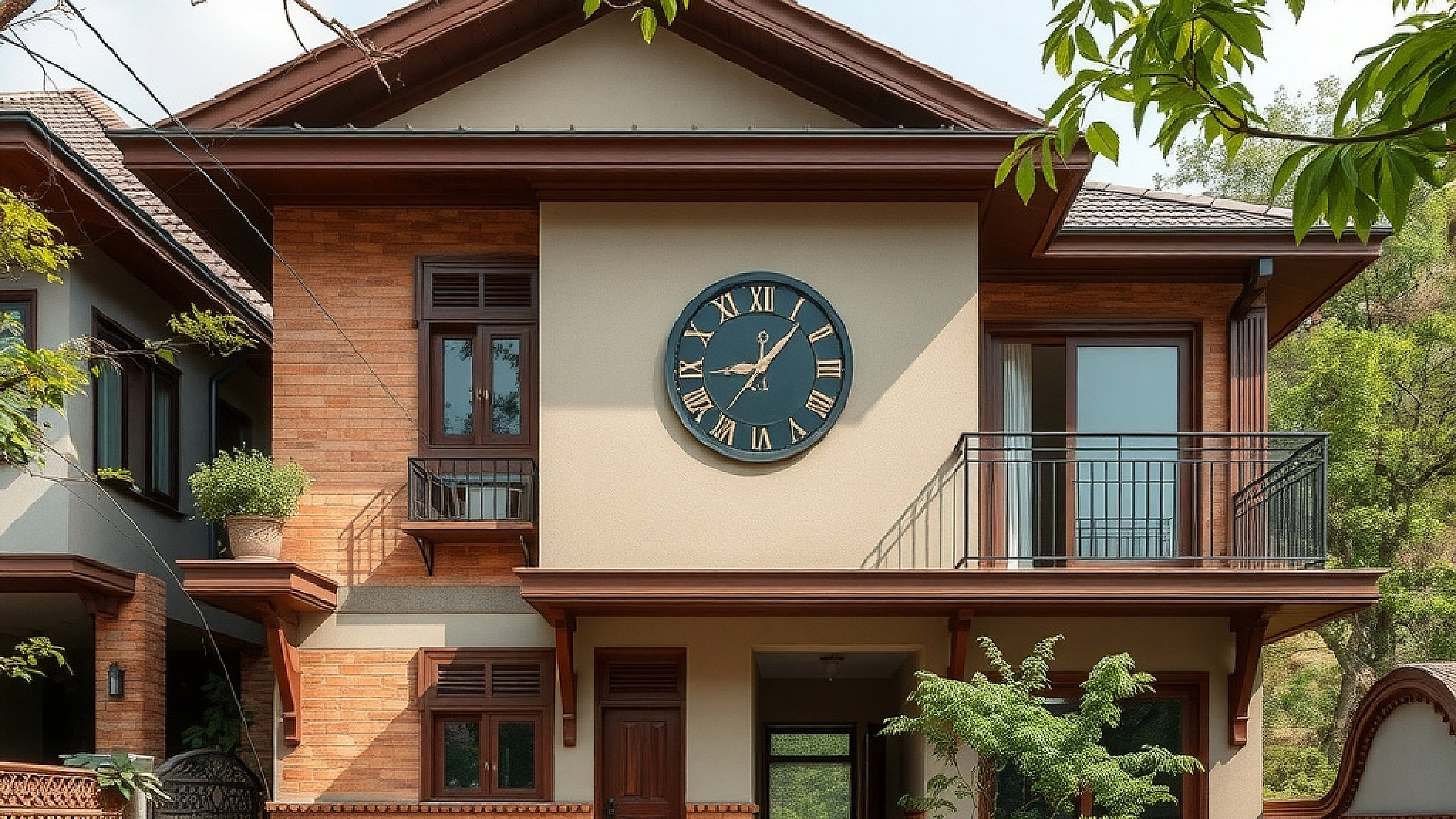
Beyond the Compass: Why Your Kathmandu Home Feels 'Heavy'
You’ve invested 2 crores into a beautiful new pillar-system house in Sitapaila or Bhaisepati. The marble is polished, the false ceiling is elegant, yet something feels off. Perhaps the family is constantly bickering, or you find that despite a high salary, your savings are draining into unexpected medical bills. In our practice at Vastuveda Designs, we often find that the culprit isn't the aesthetic—it's a fundamental mismatch between the Earth’s magnetic grid and your home’s internal energy flow.
Vastu Shastra is often misunderstood as a religious superstition. In reality, it is a sophisticated ancient science of climatology and spatial geometry. In the context of Nepal’s unique geography—where the sun’s path and the Himalayan winds dictate our comfort—ignoring these principles can lead to a home that works against you rather than for you. Let's look at the three most critical areas: the Agneya (South-East) kitchen, the main entrance, and the practical fixes for when things aren't perfect.
The Fire Element: Why the South-East Kitchen is Non-Negotiable
In Vastu Shastra, the South-East corner is governed by Agni (Fire). In traditional Nepali homes, this placement ensured that smoke was carried away by the prevailing winds without suffocating the rest of the house. Today, even with modern chimneys, the energetic impact remains. A kitchen placed in the North-East (the zone of water) creates a clash of elements, often manifesting as digestive issues for the residents or chronic irritability in the person cooking.
Practical Fixes for a Misplaced Kitchen
- The Zinc/Copper Strip: If your kitchen is in the North-East, you don't necessarily need to demolish the slab. We often suggest embedding a thin copper strip into the flooring at the entrance of the kitchen to 'seal' the energy.
- Color Correction: Avoid blue or black granite in a South-East kitchen. These colors represent water and extinguish the fire element. Opt for reddish-brown, maroon, or green tones (representing wood which fuels fire).
- The Gas Stove Position: Ensure the cook faces East while preparing meals. This aligns the body with the morning sun's vital rays, promoting better health for the entire household.
The Lion’s Mouth: Correcting Main Entrance Energy
The main door, or Maha-Dwar, is where your home 'breathes.' In many Kathmandu valley plots, odd shapes or narrow access roads force the entrance into unfavorable zones like the South-West. A South-West entrance is traditionally linked to financial instability and 'Rahu' energy. In a city where property prices are soaring, you cannot always choose your plot’s orientation, but you can choose how you treat the threshold.
Remedies for a South-Facing Door
If your main door is stuck in a 'negative' zone of the South or South-West, try these non-invasive corrections:
- Threshold Elevation: Raise the threshold (dhoka-dharo) slightly using wood or marble. This prevents energy from 'leaking' out and physically stops dust and negative vibrations from entering easily.
- The Brass Pyramid: Installing three lead or brass pyramids above the door frame can help neutralize the heavy energy associated with the South-West direction.
- Lighting: Ensure the entrance is the brightest part of the house. Use warm yellow lights rather than harsh white LEDs to invite 'Sattvic' energy into the foyer.
The North-East (Ishanya) Sink Conflict
A common mistake in modern Nepali modular kitchens is placing the sink and the stove side-by-side. Fire and Water are enemies. If your sink is right next to your stove, it symbolizes wealth (water) being burnt away by expenses (fire). Maintaining a distance of at least 3 feet is crucial. If space is tight, place a small wooden partition or even a simple green plant between the two to act as a buffer.
Budget-Friendly Vastu Materials in Nepal
Correcting Vastu doesn't have to cost lakhs. Most materials are available in local hardware stores in Teku or through specialized Vastu consultants:
- Yellow Marble/Jaisalmer Stone: Excellent for neutralizing South-West defects; costs roughly NPR 250-400 per sq. ft.
- Copper Wire/Strips: Used for 'earthing' negative energy in the North-West or South-East; available at most electrical wholesalers.
- Camphor (Kapur) Diffusers: A simple way to clear the 'Vaayu' (air) quality in a home where ventilation is poor due to tight urban clustering.
Key Takeaway for Homeowners
Vastu Shastra is about balance, not fear. While the ideal home follows every cardinal rule, most modern apartments and houses require 'remedial Vastu.' By focusing on the kitchen’s fire element and the entrance’s protective energy, you can significantly shift the vibration of your living space. If you are planning a new build or feeling the weight of an existing one, a professional consultation can provide a roadmap to harmony without needing a sledgehammer. At Vastuveda Designs, we blend these ancient truths with modern Nepali architecture to create spaces that truly breathe.