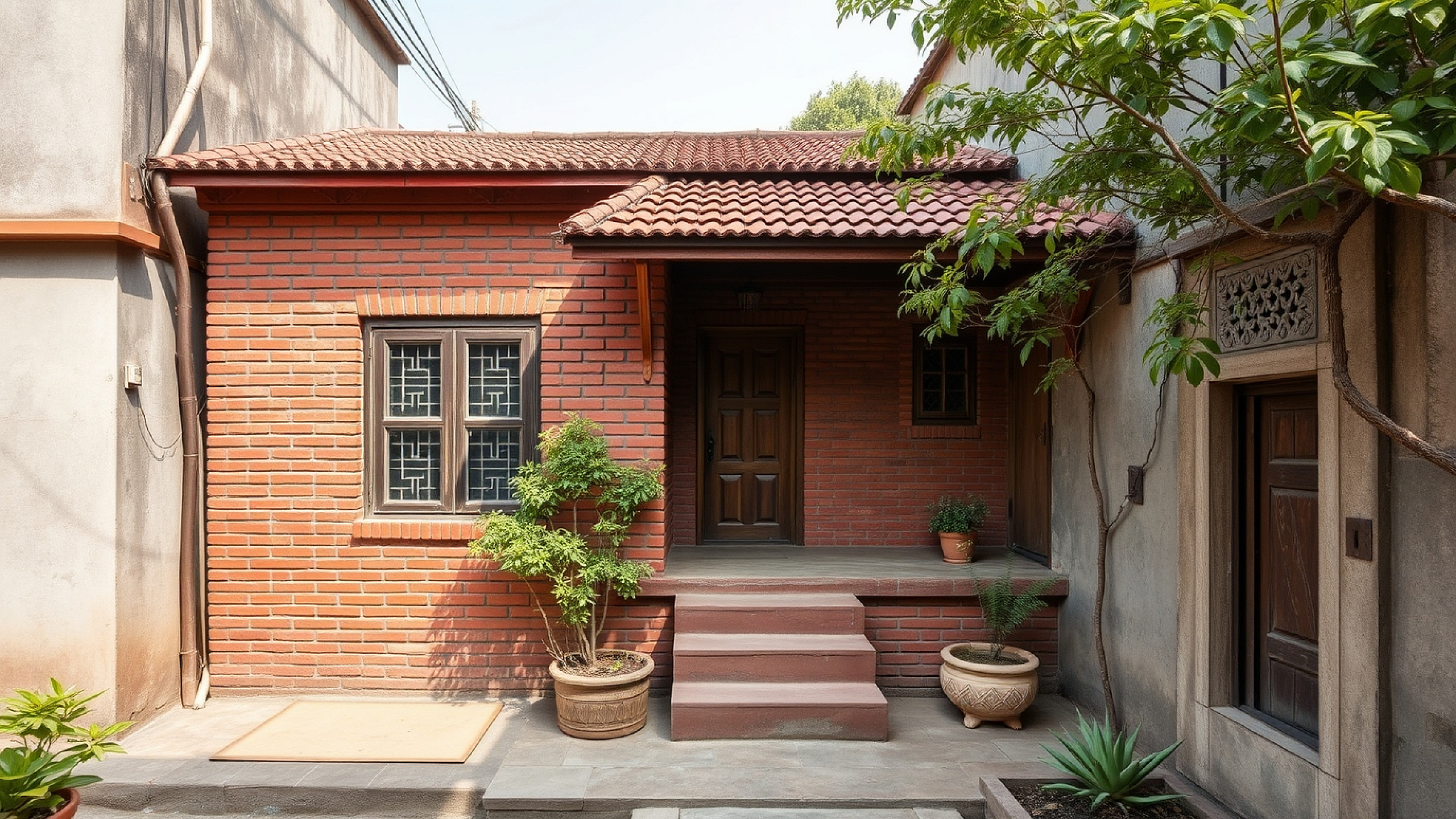
The Struggle of Aligning Ancient Wisdom with Modern Blueprints
You’ve finally secured a 3-anna plot in a tight galli in Koteshwor or a sloping piece of land in Budhanilkantha. You want a home that breathes well and feels right, but the municipal building codes and the narrow shape of your land often force the kitchen into a dark corner or the main entrance into a 'forbidden' zone. Many Nepali homeowners realize too late that their stove faces the wrong way or their main door sits in a South-West clash. At Vastuveda Designs, we see this daily: the anxiety that a structural mistake might invite financial stress or health issues.
Vastu Shastra isn't about rigid rules that demand you tear down your house. It is the science of directional energy and elemental balance. In the context of Nepal’s unique topography and the shift toward compact RCC (Reinforced Concrete) structures, we need to adapt these ancient principles. If your house is already built, or your land doesn't allow for a 'perfect' layout, there are specific corrective measures you can take today to restore harmony.
The Fire Element: Fixing a Misplaced Kitchen
In a Nepali household, the kitchen is more than just a place to cook; it is the shrine of Agni (Fire). Ideally, your kitchen should be in the South-East (Agneya Kon). However, with modern apartment living in Lalitpur or narrow row-housing, the kitchen often ends up in the North-East or South-West.
A kitchen in the North-East is particularly problematic as it places fire in the zone of water and spirit, often leading to constant bickering among family members. If you cannot relocate the kitchen, here are some practical Vastu fixes:
- The Counterbalance: If your stove is in the North-East, place a small yellow marble slab under the gas stove. This helps neutralize the elemental conflict.
- Color Therapy: Avoid blue or black tiles in a North-East or South-East kitchen. Use shades of cream, light orange, or soft pink to soothe the energy.
- Sink-Stove Separation: Ensure your sink (Water) and stove (Fire) are not on the same line. Even a 2-foot distance or placing a wooden partition/potted herb between them can help.
The South-West Entrance Dilemma
The main entrance is the 'mouth' of the home. In Kathmandu’s dense neighborhoods, you often don't have a choice but to have a door facing the road, even if that road is in the South-West (Nairitya). This direction is ruled by Rahu and is traditionally associated with instability if not managed correctly.
If your main door is in the South-West, you might feel that 'money comes in but never stays.' To fix this without moving the door:
- The Threshold Trick: Build a slightly raised threshold (chowkhat) made of yellow marble or wood. This acts as a symbolic barrier against negative energy.
- Protective Symbols: Place a pair of brass elephants outside the door or install a Panchmukhi Hanuman image above the door on the outside.
- Lead Helix: Embedding a lead helix or lead wire under the flooring of the South-West entrance is a common architectural Vastu remedy to 'ground' the unstable energy.
Bedroom Vastu for Restless Sleepers
Many clients come to us complaining of insomnia or fatigue despite living in expensive new builds in Bhaisepati. Often, the culprit is the placement of the head while sleeping or the presence of a mirror reflecting the bed. In Vastu Shastra, the Master Bedroom must ideally be in the South-West to anchor the head of the family.
If your bedroom is in the North-West (the zone of air/movement), you might find yourself feeling unsettled or traveling too much. To fix this, ensure your bed is made of solid wood (avoid metal frames which conduct electromagnetic fields) and positioned so your head points South or East. Never point your head North; the Earth’s magnetic pull can lead to headaches and poor circulation over time.
Practical Steps for Every Nepali Homeowner
Vastu is as much about cleanliness and light as it is about directions. Regardless of your home's orientation, these three steps improve spatial energy immediately:
- Clear the Brahmasthan: The center of your house should be empty and clean. In many Nepali homes, we tend to store heavy furniture or grain sacks in the middle of the living room. Clear this space to let energy circulate.
- Salt Water Mopping: Once a week, mop your floors with water mixed with Himalayan rock salt (available in any local bazaar for around 50-80 NPR per kg). This is an ancient technique to clear stagnant 'Vaayu'.
- Light the North-East: Keep a small lamp or a bright light burning in the North-East corner of your house during the evening to invite clarity and prosperity.
Correcting Vastu isn't about superstitious rituals; it's about aligning your living space with the natural laws of light, wind, and magnetism. Whether you are building a new villa or trying to improve a rented flat, these small shifts create a visible difference in the 'vibe' of your home. If you are facing persistent issues with your layout, a professional consultation can help identify the exact degrees of deviation and provide a customized remedy plan.
The Bottom Line
Your home is a living organism. When its 'chakras' or directions are blocked, the residents feel the friction. Start with one area—the kitchen or the entrance—and observe the changes in your household’s mood and productivity. At Vastuveda Designs, we blend modern architectural aesthetics with these timeless principles to ensure your home is not just a structure, but a sanctuary. If you’re ready to harmonize your space, we’re here to guide you through the process.