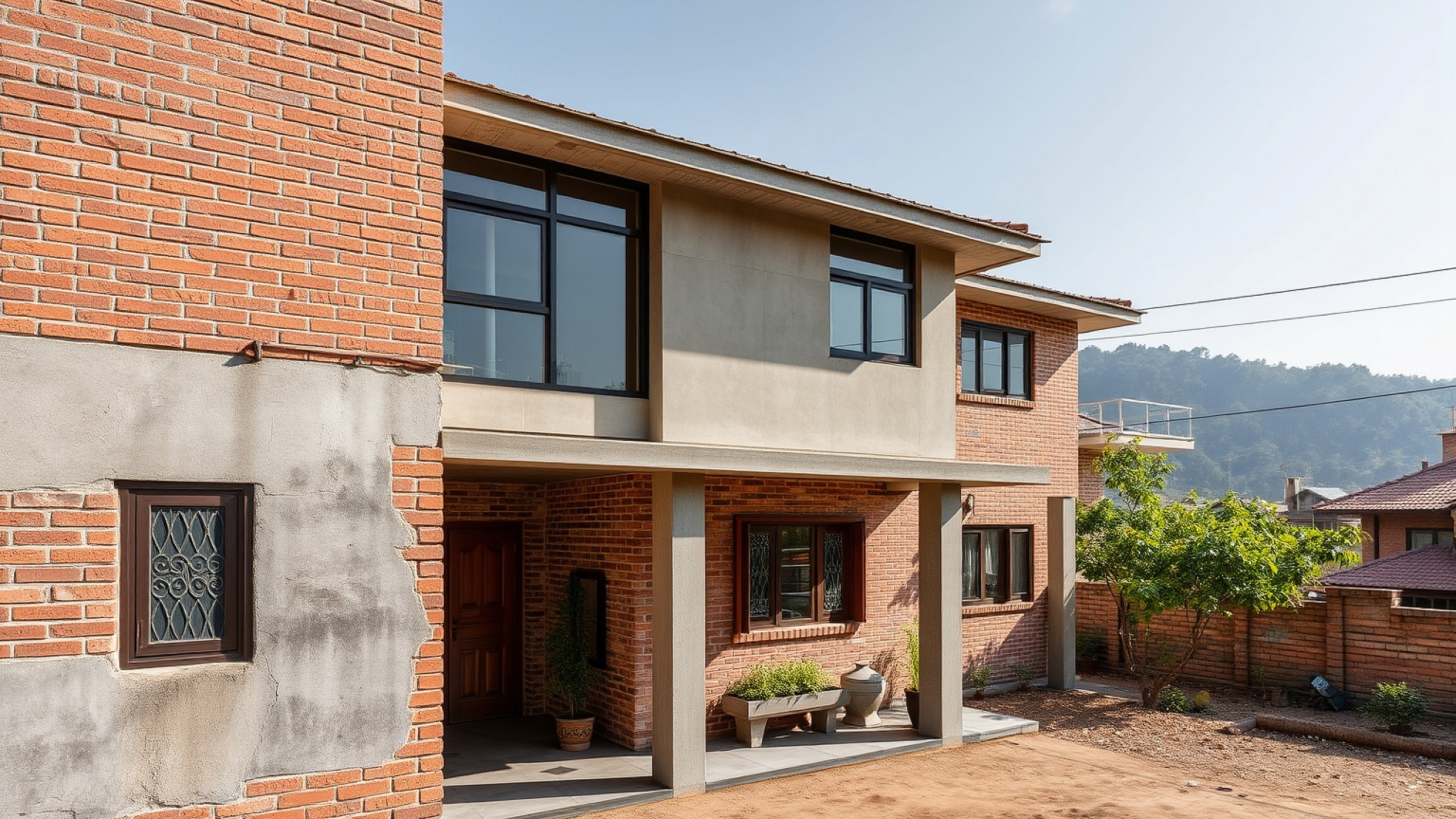
Beyond the Pillar: Why Your Material Choice Matters
You’ve finally secured a plot in the suburbs of Kathmandu or perhaps on the outskirts of Bharatpur. You have a vision for a beautiful 2.5-story home, and your engineer has handed you a structural drawing full of 16mm and 20mm rebar specifications. But here is the reality: a building’s safety isn't just about the thickness of the rod, and its comfort isn't just about the brand of paint. In Nepal’s unique landscape, we face a double challenge—intense seismic vulnerability and a climate that swings from bone-chilling winters to 40-degree humid summers.
Choosing building materials suited to Nepal’s climate and earthquake zones is the most critical decision you will make after finalizing your floor plan. If you choose materials based solely on the lowest price at the local hardware store, you might end up with a house that feels like an oven in June and develops hairline cracks after the slightest tremor. Let’s look at how to select materials that offer genuine structural integrity and thermal comfort.
The Brick Dilemma: Red Clay vs. AAC Blocks
In the Kathmandu Valley, we have a long history with traditional red bricks. However, when building for earthquake resilience, weight is your enemy. The heavier the building, the greater the force it attracts during an earthquake. This is why many modern Nepali homeowners are shifting toward Autoclaved Aerated Concrete (AAC) blocks, especially for non-load-bearing partition walls.
- Weight Advantage: AAC blocks are nearly 1/3rd the weight of traditional red bricks. This significantly reduces the 'dead load' on your RCC frame.
- Thermal Insulation: In places like Nepalgunj or Chitwan, red bricks soak up heat all day and radiate it back into your rooms at night. AAC blocks have a cellular structure that acts as a natural barrier to heat.
- Cost Implications: While a single AAC block costs more than a brick (roughly NPR 400-450 per block vs NPR 15-20 per brick), you save significantly on mortar, labor time, and plastering costs.
If you prefer the aesthetic of red bricks, ensure they are 'Machine-Made' bricks. They have higher compressive strength and lower water absorption compared to the hand-molded bricks often seen in local kilns.
Selecting the Right Cement: OPC vs. PPC
Walk into any construction site in Lalitpur or Pokhara, and you'll see bags of cement stacked high. But do you know when to use which type? For a home that lasts generations, you must distinguish between Ordinary Portland Cement (OPC) and Pozzolana Portland Cement (PPC).
- For the Skeleton (Columns and Beams): Always use 43-grade or 53-grade OPC cement. It sets faster and achieves high early strength, which is vital for the structural 'bones' of your house.
- For Finishing (Plaster and Brickwork): Use PPC. It has a slower setting time, which reduces the risk of shrinkage cracks. It is also more resistant to chemical attacks, making it better for our often-damp Nepali climate.
Thermal Comfort: Windows and Roofing
Most Nepali homes suffer from 'Thermal Bridging.' We build concrete boxes that trap heat in summer and leak warmth in winter. To combat this, look beyond the standard single-pane glass windows. Switching to Double Glazed Units (DGU) with Upvc frames is a game-changer. While it might cost 30% more initially, the reduction in electricity bills for AC and heaters will pay for it within five years.
For roofing, if you are building in the hilly regions, consider adding a layer of XPS (Extruded Polystyrene) insulation under your final roof slab or false ceiling. It prevents the top floor from becoming an uninhabitable furnace during the sunny afternoons of Baisakh and Jestha.
The Hidden Essential: Rebar Quality
In a high-seismic zone like Nepal, your steel reinforcement must be ductile. This means the steel should be able to bend and deform without snapping during a quake. Look for 'TMT' (Thermo-Mechanically Treated) bars with a 'D' designation (e.g., Fe 500D). The 'D' stands for ductility. Avoid using rusted or low-grade local rebars that haven't been certified by the Nepal Bureau of Standards & Metrology (NBSM).
Practical Steps for Your Site Execution
- Water Quality: Never use salty or muddy water for mixing concrete. In many parts of the Terai, groundwater has high iron content which can corrode your rebar from the inside out. Use potable water.
- Curing is King: No matter how expensive your cement is, if you don't 'cure' (water) your columns and slabs for at least 7 to 14 days, they will never reach full strength.
- Store Materials Correctly: Cement bags should never touch the ground directly. Keep them on wooden planks and away from damp walls to prevent 'lumping'.
Key Takeaway
Building a home in Nepal is often a once-in-a-lifetime investment. By prioritizing lightweight materials like AAC blocks for walls, using high-ductility TMT steel, and choosing the right cement for the right task, you create a sanctuary that is both safe from the earth's movements and comfortable against the elements. Focus on quality over the immediate 'cheap' fix.
Are you planning your dream home and feeling overwhelmed by material choices and Vastu requirements? At Vastuveda Designs, we harmonize modern engineering with timeless Vastu principles to create homes that are structurally sound and spiritually balanced. Feel free to reach out to our team for a consultation on your upcoming project.