The 'Tight Plot' Dilemma: Why Your Home’s Energy Feels Blocked
You’ve finally secured a 3-anna plot in a bustling neighborhood like Balaju or Imadol. You want a modern home with a car park, but the municipal setbacks and the shape of the land force your kitchen into the North-West and your main entrance into a ‘dead’ zone. Suddenly, the house feels heavy. Arguments spark over small dinners, and that lingering sense of restlessness won't go away. This is the reality for many Nepali homeowners where standard Vastu Shastra rules clash with the constraints of urban civil engineering.
At Vastuveda Designs, we see this daily. You don't always need to tear down walls or pay millions in structural changes. Often, the 'science of directions' is about balancing elements—Fire, Water, Air, Earth, and Space—using materials and placements that align with our local climate and lifestyle. Let’s look at how to fix the most common Vastu problems in your kitchen and entrance without breaking your budget.
The Kitchen Conflict: When Agni is Out of Place
In a perfect Vastu world, your kitchen belongs in the South-East (Agneya Kon), the corner of the fire element. However, in many Kathmandu apartments or colony houses, kitchens are often pushed to the North or North-East. This is considered a major Vastu defect because it places the 'Fire' element in the zone of 'Water'.
The Fix for a Wrongly Placed Kitchen:
- The Color Palette: If your kitchen is in the North, avoid blue or black marble countertops. These represent water and will extinguish the 'digestive fire' of the home's prosperity. Instead, use green marble or a light wood finish to act as a 'bridge' between water and fire.
- The Stove Positioning: Even if the room is in the wrong corner, ensure the cook faces East while preparing meals. This simple shift ensures you are absorbing the vital morning solar energy.
- The 'Gemstone' Remedy: Placing a small piece of red jasper or a copper Swastika under the stove can help neutralize the energy of a kitchen trapped in the North-West or North.
The Main Entrance: Beyond the Facing Direction
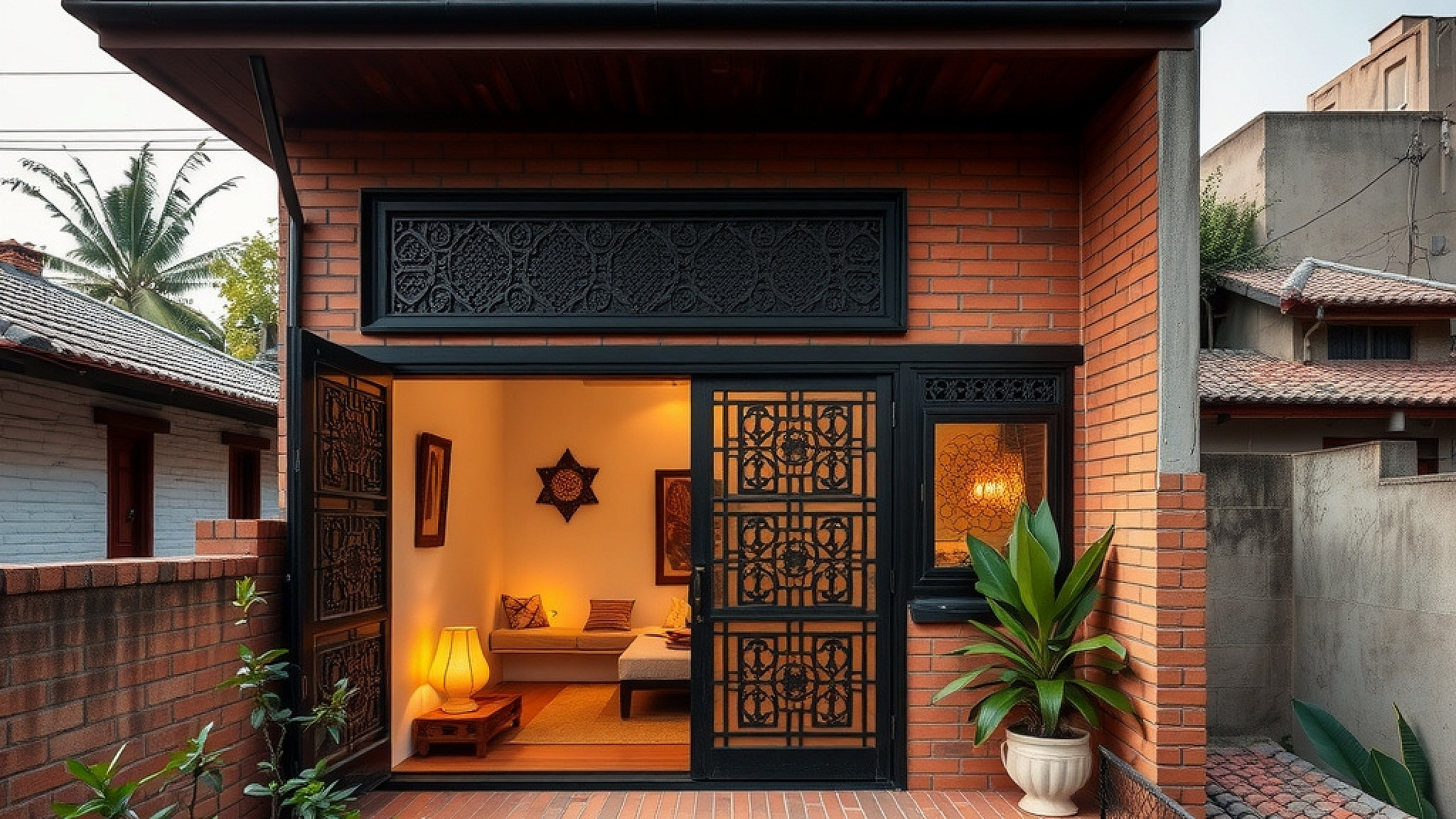
Nepali culture places immense value on the Mula-Dwara (Main Door). It is the 'mouth' of the house. While everyone chases a North or East-facing door, the reality of road access in Lalitpur or Bhaktapur often leaves us with South-facing entrances. A South-facing door isn't inherently 'evil,' but it requires specific structural guarding to prevent energy drainage.
Practical Upgrades for Your Entrance:
Avoid using dark, gloomy colors for the main door. In our dusty climate, many choose dark browns or grays, but for a South-facing door, a subtle shade of vermillion or a bright Teak wood polish is much better. Ensure the threshold (Parsali) is slightly raised. A marble or wooden threshold prevents the positive energy of the house from flowing out onto the street.
- The Lighting Fix: Ensure your entrance is the brightest part of your facade. Use warm LED lights (2700K) rather than cold white lights. This invites 'Sattvic' energy into the home.
- The Metal Remedy: For South-facing doors, embedding three lead helixes or a copper strip under the threshold can act as an energetic barrier against 'Yama' or negative southern influences.
The Bedroom’s Silent Impact on Health
Are you waking up tired despite sleeping 8 hours? Your bedroom might be in the North-East, which is too 'active' for deep rest. Ideally, the master bedroom should be in the South-West (Nairitya Kon), the zone of Earth and stability. If your room is stuck in the North-East, you are likely sleeping in a zone meant for meditation, not heavy rest.
How to stabilize a North-East Bedroom:
- Heavier Furniture: Use solid wood furniture. In Nepal, Sisau or Teak are excellent choices. Place the heaviest wardrobe in the South-West corner of that specific room to ground the energy.
- Avoid Mirrors: Never have a mirror reflecting your bed. In modern Nepali interiors, we love sliding glass wardrobes, but if they face the bed, cover them at night with a curtain. It prevents the 'bounce back' of stress energy.
- The Salt Cure: Place a bowl of unrefined Himalayan pink salt in the corner of the room. It absorbs the 'dampness'—both literal and energetic—common in our monsoon season.
Making Vastu Work in the Modern Nepali Context
Vastu Shastra is not about superstition; it is about residential psychology and environmental alignment. You don't need to spend NPR 500,000 on 'Vastu consultants' who sell you expensive crystals. Most fixes cost less than a few thousand rupees and involve rearranging what you already own.
The goal is to make your home a place where you feel recharged, not drained. Whether you are building in the heat of Terai or the hills of Kaski, these fundamental balance points remain the same.
Key Takeaway
Balance the elements, don't just chase directions. If a direction is wrong, use colors, metals, and light to compensate. Your home should serve you, not the other way around.
If you are planning a new build or a major renovation and want to ensure your site plan aligns with both Vastu and modern functionality, feel free to reach out to our team at Vastuveda Designs for a professional layout review.