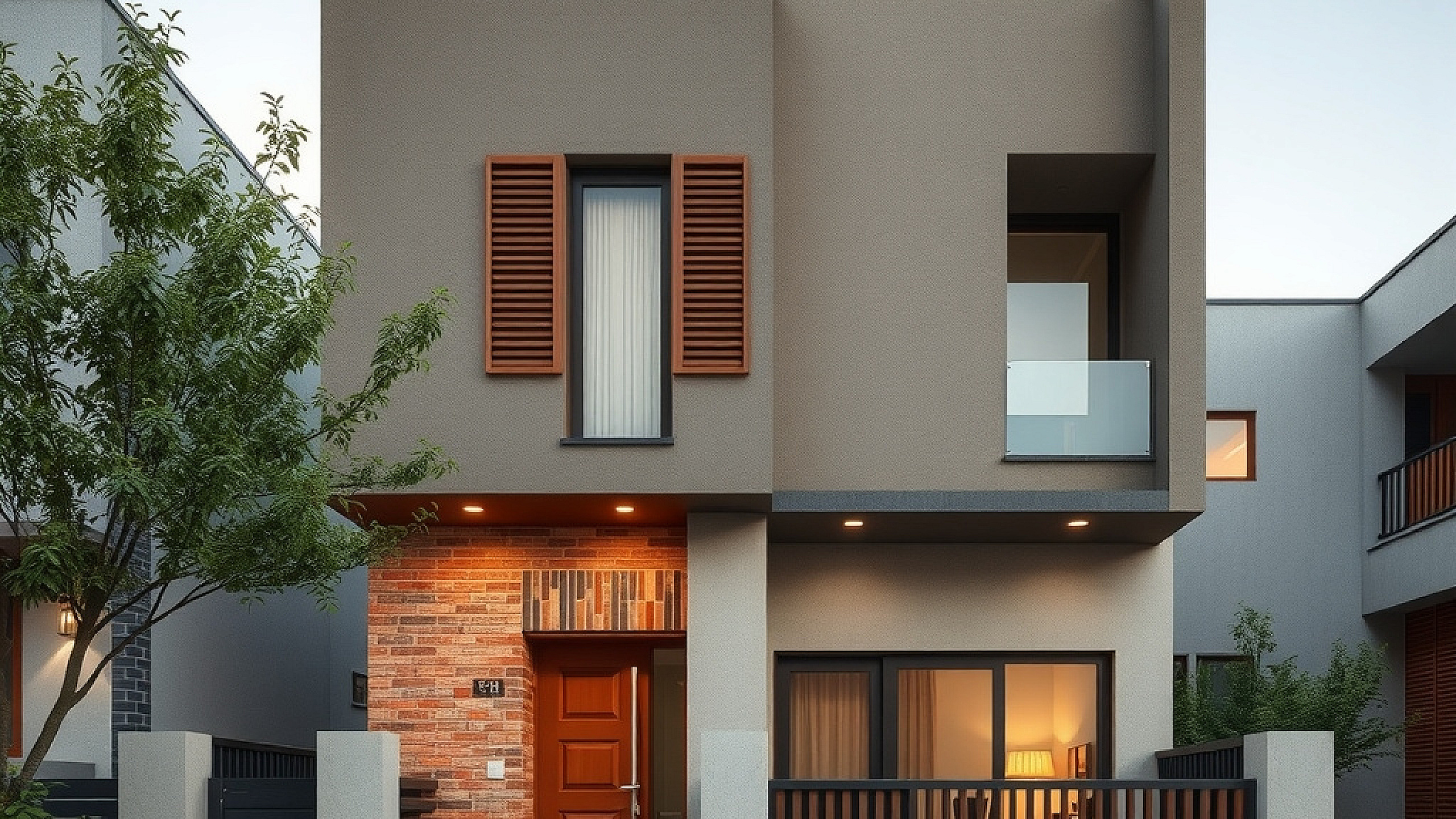
Beyond the Box: Redefining the Nepali House Front
Walking through the residential alleys of Kathmandu, Lalitpur, or the rapidly expanding suburbs of Butwal, you likely see the same pattern: rectangular concrete blocks with flat plaster and maybe a splash of beige or grey paint. Most homeowners in Nepal feel restricted by small plot sizes—often ranging from 3 aana to 5 aana—believing that a narrow frontage means their elevation design must be boring. This is a misconception that we see daily at Vastuveda Designs.
Your home’s facade is its first handshake with the world. In Nepal’s urban landscape, where houses are built close together, the challenge isn't just about looking good; it is about creating a sense of space, managing the harsh afternoon sun, and ensuring privacy without feeling boxed in. Let’s explore how you can elevate your home’s exterior from a standard 'flat' look to a multidimensional architectural statement.
The Power of Verticality and Layering
When you have a narrow plot, the only way is up. However, a tall, flat wall can look imposing and industrial. To fix this, we use 'layering.' By pushing parts of the facade back and bringing others forward, you create shadows and depth that make the house look wider and more sophisticated.
- Cantilevered Balconies: Instead of simple railings, use concrete or steel extensions that 'float.' This breaks the vertical line of the building.
- Vertical Louvers: Using wood-finish aluminum or MS (Mild Steel) fins provides privacy for your windows while adding a sleek, modern texture to the elevation design.
- Double-Height Voids: If your floor plan allows, a double-height window covered with a decorative screen can make a small house look like a grand villa.
Material Palette: Local Soul with Modern Finish
One of the biggest mistakes in exterior design in Nepal is over-relying on expensive imported marble that doesn't breathe in our climate. Instead, consider a mix of textures that can withstand the monsoon rains and the dusty dry seasons of the Terai and hills.
Exposed Brick and Haku Chapa: Reclaiming the traditional Newari aesthetic is a massive trend in modern Nepali architecture. Using high-quality machine-made bricks alongside smooth white plaster creates a beautiful 'warm vs. cold' contrast. It is cost-effective, at roughly NPR 25-40 per brick, and ages gracefully without needing constant repainting.
Stone Cladding: Instead of covering the whole house, use natural Nepali slate or slate-tiles on a single prominent pillar or a boundary wall. This grounds the building and adds a premium feel for a fraction of the cost of a full stone facade.
Climate-Responsive Facades for Nepal
An elevation isn't just a mask; it’s a filter for light and air. In Nepal, we deal with intense UV rays in the afternoon and heavy rain. Your elevation design should work for you, not against you.
- Extended Chajjas (Eaves): Modern houses often ditch the traditional roof overhang, leading to damp walls during the monsoon. We recommend 'Hidden Chajjas'—protrusions that are integrated into the design to protect windows while maintaining a flat-roof modern look.
- Planter Boxes: Integrating built-in concrete planters into the balcony design allows greenery to spill over the facade. In cities like Pokhara or Kathmandu, this softens the concrete and helps cool the interior air naturally.
- The Jali Effect: CNC-cut metal screens or traditional brick jalis allow cross-ventilation while blocking the direct heat of the sun, perfect for south-facing plots in the Terai region.
The Importance of Lighting Design
A great elevation design should look equally stunning at 8 PM as it does at 8 AM. Many Nepali homeowners install bright, generic floodlights that wash out all the architectural details. Instead, use 'Layered Lighting.'
Focus on 'Up-lighters' placed at the base of textured walls to highlight stone or brick patterns. Use 'Warm White' (3000K) LED strips hidden under balcony edges to create a floating effect. This doesn't just add beauty; it increases the perceived value of your property significantly if you ever decide to sell or rent it out.
Budgeting for Your Exterior
Quality doesn't always mean the most expensive material. In the current Nepali market, a mid-range, high-impact facade can be achieved by allocating about 10% to 15% of your total construction budget specifically for elevation treatments. This includes the cost of ACP (Aluminum Composite Panels), HPL (High-Pressure Laminate), special paints, or CNC screens. Using locally available materials like brick and stone can bring this cost down while increasing the 'soul' of the home.
Key Takeaways for Your Modern Home
- Don't be flat: Use protrusions and recesses to create depth.
- Mix textures: Combine smooth plaster with rough brick or stone.
- Think green: Build-in spots for plants to combat the urban heat.
- Light it right: Use focused, warm lighting rather than bright floodlights.
Designing a home in Nepal’s unique terrain and urban density requires more than just a pretty picture; it requires a deep understanding of structural integrity and Vastu principles. If you are planning your dream home and want an elevation that stands out in your neighborhood while remaining functional, feel free to reach out to our team at Vastuveda Designs for a personalized consultation.