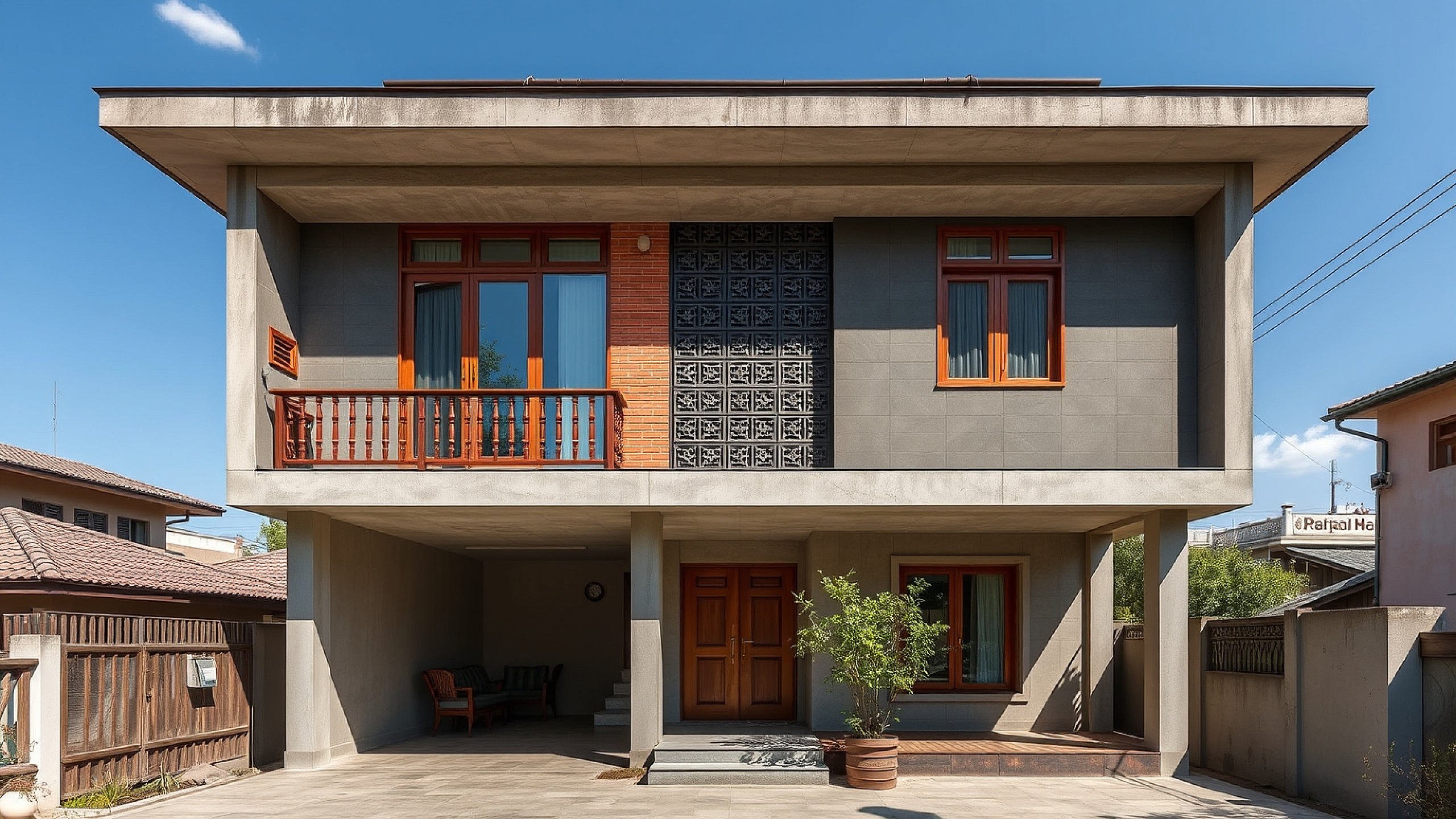
Beyond the Concrete Box: Redefining the Nepali Streetscape
Walk through any developing neighborhood in Kathmandu, Pokhara, or Butwal, and you will notice a recurring pattern: rows of gray or beige concrete boxes, often indistinguishable from one another. We spend years saving millions of NPR to build our dream homes, yet we often settle for a 'copy-paste' facade we saw on a neighbor's plot. But what if your home could honor the rich architectural heritage of the Newari or Thakali styles while still offering the sleek, functional aesthetics of 2024? This is where the concept of Modern-Ethnic Fusion comes in.
Creating a unique elevation design for houses in Nepal isn't just about picking an expensive paint color. It is about understanding how the harsh sun of the Terai or the monsoon rains of the hills interact with your walls. It is about using local materials—like the warm red of Maapaa bricks or the rugged texture of slate—to create a home that feels like it belongs in the Himalayan foothills, not in a generic suburban catalog.
The Anatomy of a Modern-Ethnic Facade
The secret to a successful fusion design lies in balance. You don't want a museum piece, and you don't want a cold, industrial laboratory. To achieve this, we focus on three primary elements: material honesty, structural depth, and climate-responsive shading.
- Material Contrast: Pair smooth white cement finishes with exposed brickwork or stone cladding. The contrast between the clinical white and the earthy red creates instant visual interest without being overwhelming.
- The Modern 'Jhyal': Traditional Nepali windows are masterpieces of wood carving. In a modern elevation, we translate this by using large black-profile aluminum windows but framing them with decorative wooden louvers or recessed brick patterns that mimic ancient proportions.
- Cantilevered Planes: Use concrete slabs to create deep overhangs. These not only look sharp and modern but are essential for protecting your walls from the heavy Nepali monsoon and providing shade during the sweltering May afternoons.
Elevation Design Ideas for Houses in Nepal: Materials That Matter
In our practice at Vastuveda Designs, we often see homeowners overspending on imported Italian tiles for their exteriors, only to see them crack or fade within three years. Instead, we advocate for materials that are proven to withstand the Nepali climate while looking premium.
1. Exposed Brick and 'Telia' Finishes
Nothing beats the timeless appeal of high-quality Nepali brick. Using exposed brickwork on a specific vertical section of your facade—perhaps the staircase tower—adds warmth. It requires minimal maintenance compared to paint, which needs a fresh coat every few years in the dusty Kathmandu climate.
2. Local Slate and Stone Cladding
If you are building in a hill station like Dhulikhel or Nagarkot, incorporating local stone into the ground floor plinth or a boundary wall anchors the house to the landscape. It provides a sense of sturdiness and luxury that synthetic materials simply cannot replicate.
3. The Warmth of HPL and Wood-Substitutes
While real wood is beautiful, it requires high maintenance in our humid climate. High-Pressure Laminate (HPL) panels with a wooden texture are becoming incredibly popular for Nepali house facades. Use them sparingly on the underside of balconies or as vertical slats to break the monotony of concrete.
Practical Budgeting for your Facade
A stunning elevation design doesn't have to break your bank. In Nepal, the cost of exterior finishing can range from NPR 150 to NPR 800 per square foot, depending on the materials. Here is how to optimize your spending:
- Invest in Lighting: A simple facade can look like a luxury villa with the right warm LED 'up-and-down' lights. This is the highest ROI improvement you can make.
- Focus on One 'Hero' Element: You don't need expensive stone on every wall. Choose one prominent feature—like a large glass window or a textured stone wall—and keep the rest of the house simple and clean.
- Prioritize Waterproofing: No design looks good with damp patches. Ensure your elevation design includes proper drip molds (khapa) to prevent rainwater from streaking down your beautiful finish.
Climate-Smart Design: More Than Just Aesthetics
In the Terai regions like Biratnagar or Nepalgunj, your elevation design must prioritize heat reduction. Using light-colored reflective paints and deep balconies can lower indoor temperatures by 3-5 degrees Celsius. In the Kathmandu Valley, maximizing south-facing glass while providing adjustable shading allows you to trap the winter sun while staying cool in the summer. A truly great Nepali house facade works with the sun, not against it.
Your Next Steps to a Beautiful Home
The exterior of your house is its first impression to the world, but more importantly, it is the shell that protects your family. Moving away from generic designs toward a Modern-Ethnic fusion ensures your home is both timeless and culturally grounded. Start by observing the light on your plot at different times of the day, and choose a palette that reflects the natural colors of your surroundings.
Designing a facade that balances Vastu principles with modern aesthetics requires a nuanced touch. If you are ready to move beyond the 'concrete box' and build a home that reflects your identity, Vastuveda Designs is here to help you craft an architectural masterpiece that feels uniquely yours.