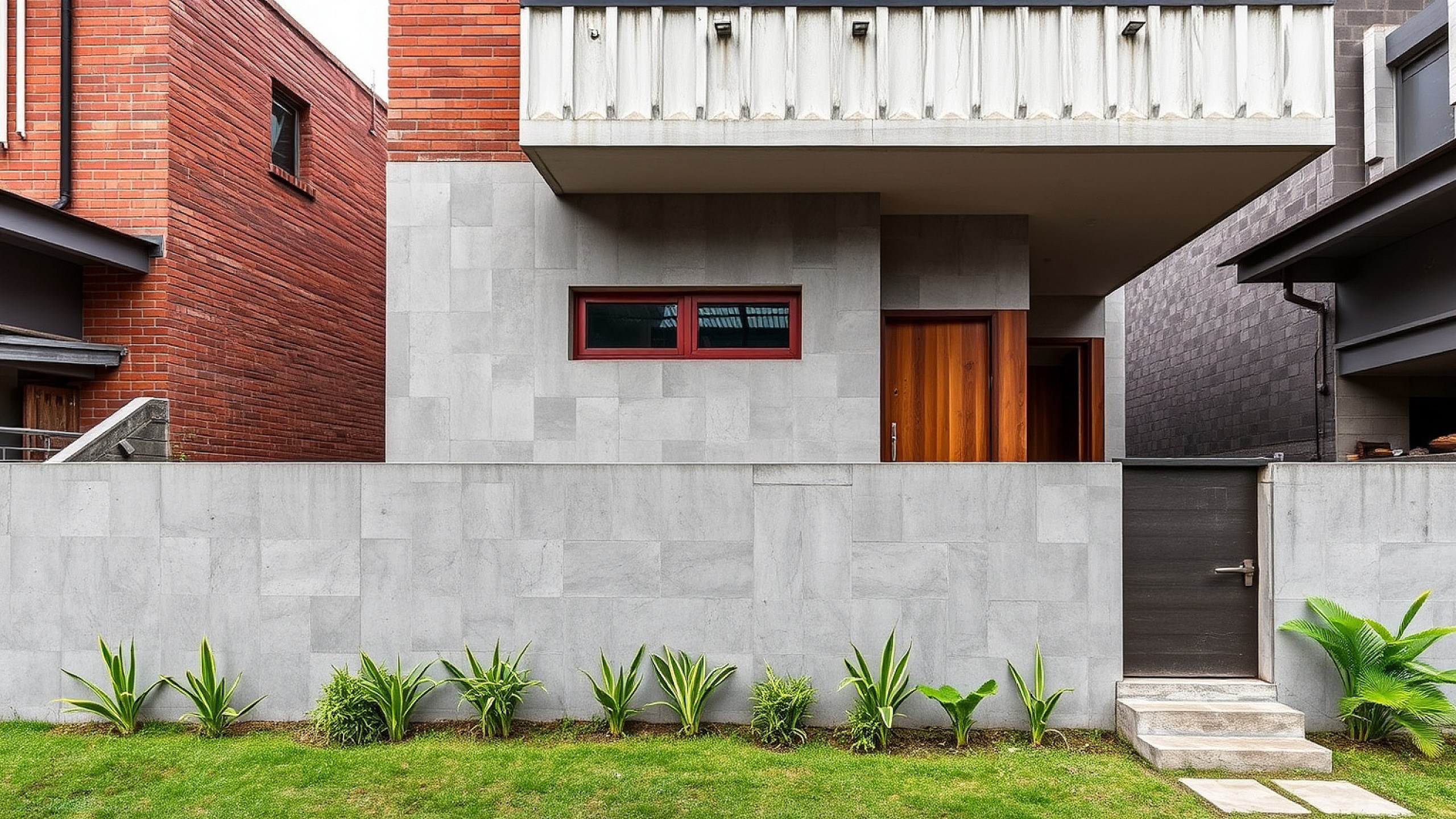
Beyond White Plaster: Redefining the Nepali Home Exterior
Walk through any new colony in Lalitpur or Bhaisepati, and you will notice a recurring theme: rows of white or beige plastered boxes that look identical and age poorly under the heavy monsoon rains. Many homeowners in Nepal spend lakhs on interior marble but settle for generic, maintenance-heavy paint for their exteriors. But what if your home could tell a different story? What if it could reflect the red-brick soul of Patan while embracing the sharp, clean lines of 21st-century architecture?
Achieving a high-end exterior / facade and elevation design in Nepal isn't about copying designs from Pinterest; it’s about choosing materials that handle our dust and rain with grace. The combination of exposed Hetauda wire-cut bricks, raw concrete finishes, and strategic metal louvers is currently the gold standard for homeowners who want luxury without the constant need for repainting.
The Power of the Material Palette: Why Brick and Concrete Work
In our experience at Vastuveda Designs, the most successful elevations in the Kathmandu Valley leverage the 'Raw and Refined' approach. This involves mixing materials that offer different textures and colors. Here is why this specific combination is winning:
- Durability against Monsoon: Plastered walls often develop cracks and moss (sheela) within two seasons. Exposed bricks and high-quality concrete sealants are far more resilient.
- Thermal Mass: Brick walls provide better insulation, keeping homes cooler in the summer and warmer during those chilly Kathmandu winters.
- Aesthetic Longevity: While trendy paint colors fade, the earthy red of a quality brick and the grey of concrete actually gain character as they age.
Designing the 'Floating' Elevation
One of the most striking exterior / facade and elevation design ideas involves the use of cantilevered slabs or 'floating' elements. In modern Nepali architecture, we often extend the first-floor slab by 3 to 5 feet over the ground floor entrance. This creates a functional porch for your car and an architectural shadow line that adds depth to the facade.
To make this look modern, avoid round pillars. Instead, use slender square steel columns or let the concrete slab appear unsupported through structural engineering. Use vertical wooden-finish aluminum louvers on the upper floor to provide privacy for bedrooms while allowing the afternoon sun to filter through without overheating the room.
Practical Budgeting for Premium Facades
A common misconception is that a designer facade costs a fortune. In reality, it is about smart allocation. Instead of cladding the entire house in expensive stone, focus on a 'Feature Wall.' A 10x20 foot section of high-quality Mahendratar stone or premium Hetauda wire-cut brick might cost you an additional NPR 80,000 to 1,20,000, but it increases the perceived value of your property by millions.
Lighting: The Secret Ingredient of Elevation
Your house should look just as good at 8 PM as it does at 2 PM. Most Nepali homes make the mistake of using bright, white floodlights that wash out the architectural details. Instead, use warm-white (3000K) up-lighters placed at the base of your brick columns. This creates a 'grazing' effect that highlights the texture of the brick. Narrow-beam spotlights can be used to highlight the verticality of your building, making a standard 2.5-story house look taller and more imposing.
The Vastu Connection in Facade Design
While we focus on aesthetics, we never ignore the energy flow. A heavy stone facade on the South and West is actually beneficial according to Vastu Shastra as it blocks the harsh afternoon heat. Ensure your main entrance (the face of your facade) is well-lit and unobstructed. If your house faces North, use more glass and lighter elements to invite the positive magnetic energy into the living spaces.
Key Takeaways for Your Project
- Mix Textures: Balance the roughness of brick with the smoothness of glass and steel.
- Think Long-term: Invest in weather-proof sealants for exposed brickwork to prevent salt efflorescence (white patches).
- Local is Better: Use Nepali materials like Mahendratar slate or Hetauda bricks to reduce transport costs and support local craftsmanship.
- Contrast is King: A dark grey charcoal frame around a window can make a simple brick wall look like a piece of art.
Designing a facade is more than just choosing a color; it is about creating a landmark. If you are planning to build or renovate your home and want a facade that stands out in your neighborhood while adhering to Vastu principles, we invite you to have a conversation with our team at Vastuveda Designs. Let’s build something that stays beautiful for generations.