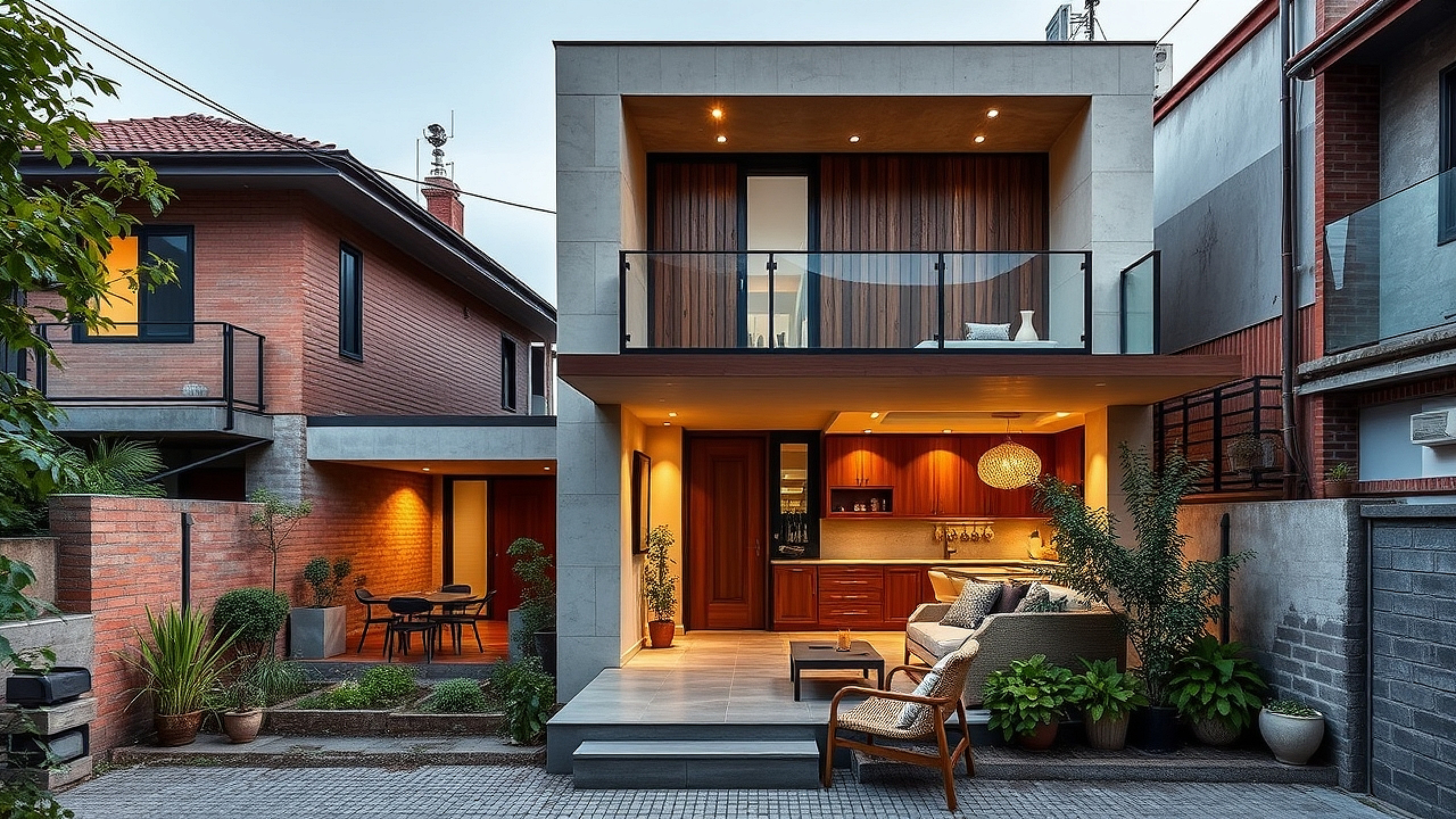
The Challenge of the 3-Aana Plot
Walk through any residential lane in Koteshwor, Imadol, or Bhaktapur, and you will see the same struggle. We are building taller and tighter on plots as small as 2.5 to 4 aana. While the exterior of these modern Nepali houses looks sleek with glass railings and HPL panels, the interiors often feel like a series of dark, cramped boxes once the furniture moves in. At Vastuveda Designs, we believe a home shouldn't feel like a cage just because the land footprint is small.
Modern Nepali interior design is no longer about just picking a paint color or buying a heavy sofa set from a showroom. It is about architectural problem-solving. How do you bring sunlight into a room when your neighbor’s wall is only five feet away? How do you store a year’s worth of rice and kitchen supplies without cluttering the hallway? Let’s look at how to solve these specific Nepali urban living challenges.
Layout: The Death of the 'Double Bed' Dominance
One of the biggest mistakes in Nepali interiors is the oversized furniture trap. We often buy massive, ornate teak wood beds and six-seater sofas that worked in our ancestral homes in the Terai or hills, but they suffocate a modern Kathmandu floor plan. To make your layout work, you must prioritize movement over bulk.
- Linear Circulation: Keep your walking paths straight. In a narrow house, avoid placing furniture that forces you to walk in an 'S' shape to get from the door to the window.
- Multifunctional Zones: Instead of a separate dining room that stays empty 22 hours a day, integrate a breakfast counter into your modular kitchen. This saves roughly 40-60 square feet of floor space.
- Pocket Doors: Traditional swing doors take up about 9 square feet of 'dead space' when they open. Using sliding pocket doors for bathrooms or puja rooms can make a small room feel significantly larger.
Lighting: Beyond the 'False Ceiling' LED Strips
In Nepal, we have a tendency to over-rely on purple and blue LED strips hidden in gypsum false ceilings. While they look fancy at night, they do nothing for the quality of life during the day. Proper modern Nepali interior design focuses on natural light and 'layered' artificial light.
Because our houses are often built close together, side windows usually look out at a neighbor's toilet vent. To fix this, consider high-level 'clerestory' windows. These are narrow windows placed near the ceiling that let in light and provide a view of the sky while maintaining total privacy. For the interior, use warm white (3000K to 4000K) lights. Cool white light makes a home feel like a hospital pharmacy, whereas warm light makes your wood textures and Dhaka cushions pop.
Smart Storage: Solving the 'Bhandar' Problem
Every Nepali household needs serious storage for grains, seasonal clothes, and extra mattresses for visiting relatives. In a modern house, the traditional 'Bhandar' (store room) is often sacrificed for an extra bathroom. This leads to boxes being piled on top of wardrobes, creating visual stress.
- The Staircase Goldmine: The space under your staircase is usually wasted. Instead of a dusty corner, install pull-out drawers or a custom pantry. This can handle 200-300 kg of kitchen staples easily.
- Full-Height Wardrobes: Stop leaving a 2-foot gap between your wardrobe and the ceiling. It only collects dust. Build your storage all the way to the slab. Use the top sections for items you only need once a year, like winter quilts or Dashain decorations.
- Box Beds with Hydraulic Lifts: Investing an extra NPR 15,000 - 20,000 in a hydraulic lift system for your bed frame turns the entire area under your mattress into an accessible closet.
Materials and Budgeting in the Nepali Market
When choosing materials, think about the Kathmandu climate—dust and dampness are your main enemies. High-gloss laminates look great but show every fingerprint and layer of dust within hours. Opt for matte finishes or textured wood laminates for cabinets.
For flooring, while marble is prestigious, it is cold underfoot during our chilly winters. High-quality SPC (Stone Plastic Composite) flooring is becoming popular in Lalitpur and Kathmandu interiors because it’s water-resistant, easier to install than tiles, and keeps the room warmer. Expect to pay around NPR 180 - 250 per square foot for decent SPC flooring including installation.
Key Takeaway for Your Home
The secret to a beautiful modern Nepali house is not how much money you spend on decor, but how well you manage the space you have. Prioritize natural light, choose furniture that fits the scale of the room, and never underestimate the power of hidden storage. A well-designed interior should feel effortless and organized, giving you a sense of peace the moment you step inside from the noisy city streets.
Planning to build or renovate your home? At Vastuveda Designs, we blend traditional Vastu principles with modern architectural logic to create homes that are both soulful and functional. Feel free to reach out for a consultation to see how we can transform your floor plan.