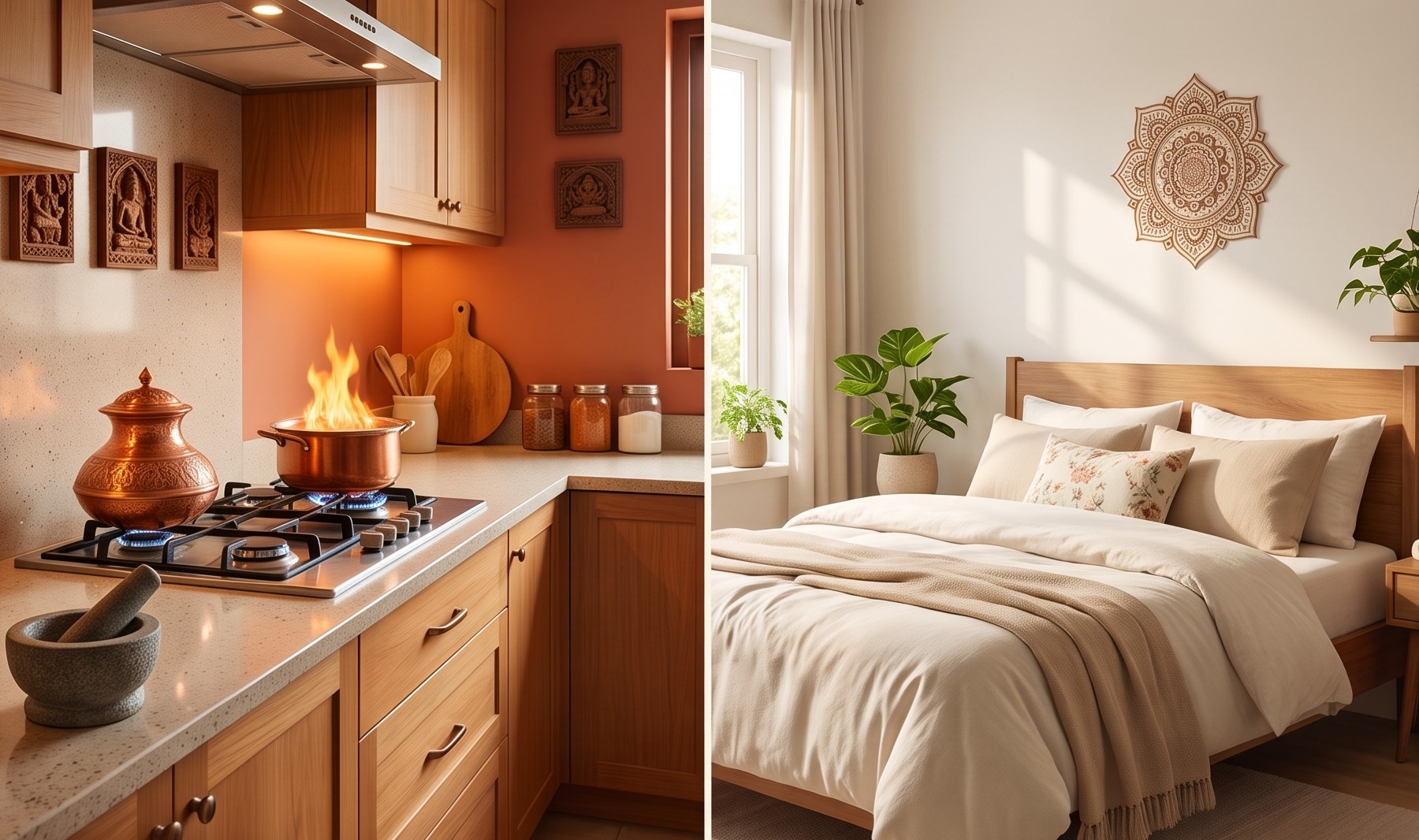
The Frustration of the 'Wrong' Direction
You’ve finally finished your dream home in a bustling colony in Lalitpur or a quiet neighborhood in Pokhara, but something feels off. Perhaps the family is constantly bickering, or you find yourself tossing and turning every night despite having a premium mattress. In many Nepali households, the pressure of limited land plots—often just 3 to 4 aana—forces architects and homeowners to compromise on traditional spatial logic. This often leads to the kitchen or bedroom landing in 'forbidden' zones.
Vastu Shastra isn't about superstition; it is the ancient science of balancing the five elements (Pancha Bhoota). When your kitchen (Fire) is in the North-East (Water zone), or your bedroom (Earth) is in the South-East (Fire zone), the energetic friction is real. Here is how you can identify these placement flaws and fix them using localized, practical remedies that don't require a sledgehammer.
The Kitchen Conflict: Reclaiming the Fire Element
The kitchen is the heart of the Nepali home, the place where Agni (fire) resides. Ideally, the kitchen belongs in the South-East corner. However, in modern Kathmandu apartments or narrow row houses, we often see kitchens placed in the North or North-East. This creates a 'clash of elements' where water douses the fire, leading to health issues or unexpected financial drains.
Practical Fixes for a Misplaced Kitchen
- The Yellow Tile Remedy: If your stove is in the North or North-East, place a yellow marble slab or paint a small yellow strip under the gas stove. In Vastu, yellow represents the Earth element, which acts as a buffer between Water and Fire.
- Balance the Sink and Stove: Ensure your sink (Water) and stove (Fire) are at least three feet apart. If they are side-by-side due to space constraints in a small kitchen, place a small wooden partition or a row of green plants between them to break the energy clash.
- Color Correction: Avoid blue or black tiles in a South-East kitchen. Stick to shades of orange, light red, or cream. For a North-placed kitchen, use off-white or light green to neutralize the conflict.
The Master Bedroom: Grounding Your Energy
In our practice at Vastuveda Designs, we often see master bedrooms placed in the North-East. While North-East is sacred, it is 'light' energy meant for prayer rooms (Puja Kotha). Sleeping there can lead to restless thoughts and a lack of authority in the household. The South-West (Nairitya) is the zone of the Earth element and is the only place where the head of the family should ideally reside to feel grounded.
Correcting Bedroom Vastu Without Moving Walls
- Head Direction is Key: Regardless of which room you are in, always sleep with your head pointing South or East. Never point your head North; the magnetic pull can disrupt blood circulation and sleep quality, a fact many modern doctors now acknowledge.
- The Heavy Furniture Hack: If your bedroom is in the 'weak' North zone, place heavy wooden cupboards or chests on the South and West walls of that room. This artificially 'heavies' the direction, mimicking the stability of the South-West.
- Mirror Management: In many Nepali homes, dressing tables face the bed. If you see your reflection while sleeping, it is said to cause health fatigue. Cover the mirror with a thick cotton cloth at night or move it so it doesn't face the bed directly.
The Main Entrance: The Mouth of the Home
The Mula Dvara or main door is where 'Prana' enters. A common mistake in Nepal’s hilly terrain is having the main door lower than the street level or directly facing a T-junction (Veedhi Shola). This can cause energy to rush in too aggressively or stagnate entirely.
Quick Entrance Enhancements
- The Threshold (Parsuli): Every Nepali home should have a raised threshold at the main door. It prevents 'wealth' from leaking out and keeps negative ground energy away. A simple 1-2 inch raised wooden or marble strip is enough.
- Lighting and Auspiciousness: Ensure the entrance is the brightest part of the house. Use warm LED lights (3000K) rather than harsh blue ones. Placing a 'Toran' made of mango leaves or marigolds, and keeping a clean nameplate, invites positive energy.
- Metal Strips: For doors in the wrong cardinal direction, a professional Vastu consultant might suggest embedding thin brass, copper, or lead strips in the flooring at the entrance to 'seal' the negative vibrations.
The Cost of Correction
Many homeowners worry that Vastu corrections cost lakhs of rupees. In reality, 80% of Vastu problems in a standard 1,500 sq. ft. Nepali home can be addressed with remedies costing between NPR 5,000 to NPR 25,000. This includes changing paint colors, adding specific plants, or installing small elemental crystals. It is a small investment compared to the mental peace it provides.
Your Path to a Harmonious Home
Your home should be your sanctuary, not a source of stress. While the ideal scenario is to design from scratch using Vastu principles, most architectural flaws have a functional workaround. By focusing on the placement of Fire in the kitchen and the stability of Earth in the bedroom, you align your living space with the natural laws of the universe. If you feel your home’s energy is blocked, start with one small change today—move your bed or add a plant—and observe the shift in your household’s mood. For a deeper, site-specific analysis, the team at Vastuveda Designs is always here to guide your journey toward a balanced home.